BB: Twefth Night, Act I

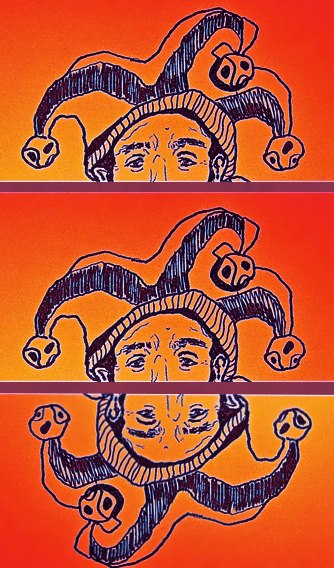
Artwork - Leigh MacRae
Artwork – Leigh MacRae

Welcome to the first act of the Bard Brawl’s sixth play, Twelfth Night!

I don’t know about you but after the labyrinthine confusion of Henry VI, part 1 and the utter bleakness of King Lear, I could use a bit of a pick-me-up.

Waddaya say to a little bit of cross-dressing, mistaken identity and drunken merriment where no one dies and which doesn’t end with the kingdom falling into chaos? I thought so.

Go ahead. I’ll give you a minute to top-up your drink.

Ready? So let’s get to it!

Listen to or download the podcast.

Act 1, scene 1 starts with the Duke Orsino sitting around with his musicians, pathetically pining after Olivia. His servant Curio asks him if he will go hunting ‘the hart’ and Orsino tells him that he is already hunting the finest ‘heart’ that beats, Olivia’s. Punderful. (Harts, for reasons that should be obvious, came up pretty often in love poetry in the Renaissance. Here’s a pretty popular example from Sir Thomas Wyatt, a man who had the misfortune of loving the same woman as Henry VIII.) Orsino’s messenger, Valentine (really Shakespeare?), arrives and informs Orsino that Olivia would not see him but sends the message that she has refused to take on suitors as she wishes to concentrate on mourning her lost brother. Morbid? Not if you;re Orsino, apparently.

The next scene, scene 2, takes place on the coast of Illyria. (Here’s a link.) There has been a shipwreck and Viola is one of the survivors. With her, the only other known survivor, the captain of the ship. The captain tells her they are in Illyria, in the lands governed by Duke Orsino. As a single woman with no resources and allies, Viola realised that she is vulnerable so she decides the enlist the captain’s help to disguise herself as a boy-eunuch and offer her services to the duke until she can figure out more about her situation.

Sir Toby belch stumbles onto the stage at the start of scene 3. He seems to think that she’s spent way too much time and energy mourning her dead brother and that she should lighten up and start worrying about the living. Specifically, it seems that Sir Toby is trying to fix his niece Olivia up with a certain Andrew Aguecheek whose chief quality is that he has money, although it seems that he’s not very good at holding on to it. In fact, he’s a total witless and clueless loser without a thought of his own. He makes a complete mess of his meeting with Maria, confusing terms of address with her name. In fact, he gets totally pwned by Maria. More drinking ensues.

The next scene is a short exchange between Duke Orsino and ‘Cesario’ (Viola in diguise). Not sure what the hiring process was like but Orsino seems to believe that ‘Cesario’ will be able to gain access to Olivia because he’s got gorgeous boyish features… As a final asside before the scene ends, Viola confessees that while she needs to woo Olivia on Orsino’s behalf, she herself has fallen for him.

In this final scene of act I we return to Olivia’s house. It seem her clown Feste has returned from some trip. She’s in no mood to laugh, though she bears Feste’s barbs lightly. Malvolio seems annoyed by Feste but Olivia calls him out for taking himself too seriously. ‘Cesario’ (Viola) is announced at the door but is initially refused entrance. However, it seems that like Orsino, Olivia cannot resist young boyish pages ans she allows Viola to enter. Viola starts with her rehearsed speech from Orsino but the two women quickly get into a war of wit which seems, in the end, only to inflame Olivia’s desire for the messenger, not the message. She tells Viola that she refuses Orsino’s advances but that she would willingly love to have a Cesario of her own… Viola leaves but Olivia, in order to make sure that ‘Cesario’ comes back, sends him a ring which she claims he left behind.

As you usual, we’ll end this week’s post with a list presenting the major characters in Twelfth Night. Hope it helps though this play is nowhere near as confusing as Henry VI part 1 or Taming of the Shrew:

  • Duke Orsino: The duke’s a love-obsessed fool who start of the play madly in love with Olivia. Honestly, he doesn’t really do much besides pine and complain. By the end of the play, he’ll hook up with Viola instead.
  • Viola: The main heroine of the play, Viola washes ashore in Illyria and disguises herself as a boy – Cesario – who is a page to Duke Orsino. Of course, she falls in love with him but all he wants her to do is woo Olivia on his behalf. She has a twin brother who looks exactly like her. Like, exactly. Somehow.
  • Sir Toby Belch: Olivia’s rowdy, drunk uncle. He seems to be the ringleader of a small group of drunken merry-makers. He takes a special pleasure in mocking the uptight Malvolio.
  • Maria: Lady Olivia’s servant. She takes the initiative in mocking Malvolio, who she feels is too uptight and serious. She’s eventually shack up with Belch.
  • Sir Andrew Aguecheek: One of Toby Belch’s friends and a suitor to Olivia. He’s basically a spineless, blubbering moron who Toby keeps around to fund his drinking and make fun of.
  • Feste, the Clown: This is lady Olivia’s clown or jester though, really, everyone spends most of their time laughing at Malvolio. He’s often considered one of Shakespeare’s best clown characters.
  • Olivia: A widow in mourning… although she’s not really mourning her husband, but her brother. Anyhow, she doesn’t want anything to do with Orsino. However, he does find his servant ‘Cesario’ to be to her liking. If only there was some way that could work out…
  • Malvolio: Olivia’s chamberlain, his job is to care for Olivia’s house. So, that makes him a middle-management administrator. Of course, Malvolio sees himself as upwardly mobile and dreams of marrying Olivia… which leaves him wide-open to Maria’s pranks. Think of him as the ugly ancestor of the strong protestant work ethic.
  • Sebastian: Viola’s twin brother. To be honest, he doesn’t have much of a personality though Viola tells us that her Cesario is copy of Sebastien in manner and dress. So, basically, Sebastian is a poor (wo)man’s Viola.
  • Antonio: An older gentleman who cares for Sebastian when he washes ashore in Illyria.

So get ready for act II, where Jay Reid… er, Sir Toby has a few more drinks and this party really gets going!

Bet this works out a touch better than the ending of King Lear.

Sonnet 48 read by first time sonneteer Eric Fortin.

(Also, how awesome is Leigh’s artwork for Twelfth Night?)

Stay in Touch Brawlers!

Follow @TheBardBrawl on Twitter.

Like our Facebook page.

Email the Bard Brawl at bardbrawl@gmail.com

Subscribe to the podcast on iTunes

She’s the Man (2006), Andy Fickman (director)

Zoey Baldwin

High school soccer movie She’s the Man’s hardly a match for Twelfth Night.

Twelfth Night, or What You Will—Shakespeare’s hilarious tale of mistaken identity and unrequited love—begins with a shipwreck on the shores of Illyria.

Or, in the case of the 2006 film She’s the Man, on the soccer pitch at Illyria boarding school. No one is presumed dead in this case; Sebastian Hastings (James Kirk (not the captain of NCC-1701-A)) has gone to London to play with his band without his parents’ knowledge.

After the girls soccer team at her school gets cut, his twin sister, Viola (Amanda Bynes), takes this as an opportunity to play soccer on her level—with the boys. And a wig. And a rather unconvincing voice timbre.

Viola hatches the switcharoo idea after her mother, who is dying for a debutante daughter, says, “Sometimes I think you might as well be your brother.” And one gratuitous salon montage underscored with an uppity chick rock cover of “You’re Gonna Make it After All” and complete with stick-on Yosemite Sam moustaches later, Viola sets her plan in action.

She tells each of her conveniently divorced parents she’s at the other’s house, and sets off for Sebastian’s new school. (Of course, this only works because no one at Illyria has met Sebastian yet.)

When Viola starts posing as Sebastian, she suddenly dons an awkward, half-southern accent and saying things like “Word, g-money.” Problems arise when her dreamy roommate, Duke Orsino (Channing Tatum) spots her tampons. To get out of the awkward situation, Viola sticks a tampon up her nose, claiming she uses them for nosebleeds.

Much like the play, Viola and Duke work out an arrangement. Viola will help Duke woo the gorgeous blonde Olivia (Laura Ramsay), and Duke helps Viola improve her soccer skills so she can make first string and kick her ex-boyfriend’s butt in the season opener. Too bad Viola is falling for Duke the whole time, and he thinks she’s her brother. Ruh-roh! Drama, drama, drama, happy ending ensues. I won’t spoil it for you.

There are a number of components in the film that could leave you scratching your head. Tatum’s Duke never seems suspicious that he’s living with a co-ed. I’m willing to suspend disbelief a little bit, but she’s not remotely convincing. The wig isn’t bad, sure, but how do the heart-to-hearts and awkward moments in the locker room not tip Duke off? And how does Olivia not realize she’s flirting with a girl?

As is the case with the original play, there’s no use trying to make sense of how a set of fraternal twins (of opposite genders) would be confused for one another. Or how when Sebastian suddenly returns from London/his watery grave, Olivia has no idea she wasn’t crushing on him all along. And so on.

This is all well and good. The play is not meant to be deep. But though the Bard’s original version is a light romp, it is filled with genuine laughs, pranks and chaos. She’s the Man, on the other hand, relies on kissing booths, debutante balls and chemistry lab partner dynamics. (Yes, Olivia falls for Viola/Sebastian in chemistry. What are the odds of that?!)


In addition to a fair dose of cheesiness:

a number of my favorite characters aren’t done their full justice—namely the staff in Olivia’s court like Feste, Maria, and the perpetually drunk Sir Toby Belch and Sir Andrew Aguecheek. True, in She’s the Man Duke has two teammates named Toby and Andrew, but they are in high school and, sadly, never drunk. (Just kidding! Stay in school, kids.)

We do get a solid dose of Malvolio in Olivia’s obsessive sidekick Malcolm Festes, but we never get to see him in yellow, cross-gartered stockings, which is disappointing. He even has a pet tarantula named Malvolio, which he pretends to lose in an attempt to prevent Viola/Sebastian from hooking up with Olivia.


The most famous verses work their way into the film, as expected, but it’s actually the only one that does. “Be not afraid of greatness: some are born great, some achieve greatness, and some have greatness thrust upon them” is used as a cliché line from Duke after Viola’s true identity is revealed in the middle of their season opening soccer game. A bit out of context, if you ask me, considering that we see that line in Malvolio’s big speech when he reads the letter Maria writes to fool him into thinking Olivia holds a torch for him.

You might be asking yourself, why should I support a celebrity who’s spinning off the rails? But people, this is Amanda Bynes pre-bizarre Twitter habits. Whatever she claims has not snapped inside her head definitely hadn’t snapped yet, so this movie’s pretty easy watching.

She was cute once! I promise. Any All That fans out there?

If Bynes’ presence puts you off, perhaps your attention might be redeemed by Channing Tatum’s irresistible charm. Besides Tatum, the only other beacon in the movie is David Cross (Oops. I mean David Cross) as Illyria’s overly friendly headmaster, Horatio Gold. But even an Arrested Development alum can’t fully rescue this awkward, unconvincing adaptation.

Plus, let’s face it, no high school Shakespeare film will ever touch what 10 Things I Hate About You did for The Taming of the Shrew. (Heath Ledger’s adorable serenade of “Can’t Take My Eyes Off of You” is forever burned on my brain.)

She’s the Man is pretty bland. I’d recommend it for sick days, if it comes on TBS or Bravo or something. Don’t go out of your way.


BB: King Lear, The Speeches

Artwork - Leigh MacRae
Artwork – Leigh MacRae

Welcome Brawlers – at long last – to the speeches podcast of King Lear!

King Lear is such an amazing play, filled to the brim with memorable speeches and scenes that we could have practically taken moments at random in the play and just posted that up. Instead, we decided to let you do the work for us.

Thanks, by the way. We appreciate it. We’ll pay you back later when we go viral.

Listen to or download the podcast.

“Hear me, my lord.” Act II, scene 4, lns 261-286 (Thanks to @everydayshakes for the suggestion!)
Speakers: Goneril, Regan and Lear
In this scene, Lear is berating his daughters for wanting to take away his entourage. They state that he shouldn’t need them because they have servants to take care of him. lear, however, responds to them by pointing out that without those desires and wishes for things which are not strictly necessary for survival, nothing separates us from beasts. As he mentions, his daughters don’t need jewelry and fancy dresses to survive and yet they want them just the same. So, as he says, don<t ask me why I want these knights – I want them because I want them.

“These late eclipses in the sun and moon portend…” Act I, scene 2, lns 104-133 (Thanks to @theshakesforum for the suggestion!)
Speakers: Gloucester, Edmund
Gloucester is giving us a lesson in astrology. He’s explaining that it’s only normal that the kingdom is being turned inside out given that the starts are themselves all out of whack. He appears to see disaster for humanity in every celestial event. As soon as he walks off-stage, Edmund tells us how he feels: what the hell does the day you were born on have to do with the decisions you make. You are the way you are because you choose to be, not because of some accident of birth.

“Away! the foul fiend follows me!” Act III, scene 4, lns 47-70
Speakers: Edgar, Lear, Fool, Kent
This is one of the many scenes where Edgar puts on his crazy hat and pretends to be Tom O’Bedlam, a wandering, mad, demon-haunted beggar. Why is he doing this/ To hide from Gloucester and everyone else trying to kill him. Parental advisory: includes a joke about nudity.

“Wisdom and goodness to the vile seem vile.” Act 4, scene 2, lns 39-69
Speakers: Albany, Goneril
The armies of France have landed in England and everyone is rallying to meet them on the field. Or, everyone except for Albany who has realized that Goneril is evil and that to fight on their side is basically to fight against Lear. In the end, he does decide to take to the field because he decides that English sovereignty is more important than this Goneril/Regan vs. Lear business. Here, Goneril is trying to get him to fight by calling him a pussy – “mew.”

“Howl, howl, howl, howl! O, you are men of stones.” Act V, scene 3, lns 263-319
Speakers: Lear, Kent, Edgar, Gentleman, Messenger, Albany
lear walk on stage holding the dead (?) Cordelia in his arms. Is this really how this is going to end? Don’t they deserve to be together one last time? Unfortunately, it is not to be and she is gone. We were going to include only the opening section but it’s such a powerful scene that we figured, what the heck: let’s let it run to it,s bitter end.

Next week (and it will be next week this time), something a little different from master Shakespeare? Something involving a shipwreck, maybe? And a happy ending?

Can’t wait to see how that one ends.

(Podcast recorded and edited by Daniel J. Rowe, Show notes by Eric Jean)

Sonnet 31 read by our first male sonneteer John dit Jack Konorska.

Stay in touch, brawlers!

Follow @TheBardBrawl on Twitter.

Like our Facebook page.

Email the Bard Brawl at bardbrawl@gmail.com

Subscribe to the podcast on iTunes

BB: King Lear, Act V

Artwork - Leigh MacRae
Artwork – Leigh MacRae

Welcome Brawlers to the grand finale of King Lear!

Listen to or download the podcast.

To quote Kent: “Is this the promised end,” where Cordelia and Lear are reunited and live together for a few more years, where Lear is restored and we’re spared the worse case scenario?

In a word, nope.

In scene 1, Edmund and Regan are discussing whether or not Albany will have taken to the field or not; it seems that he has been wracked with doubt and remorse for his part in Lear’s mistreatment. They send a messenger to check on the news. Regan then asks Edmund if he truly loves her and not Goneril. She makes him swear to never have any private discussions with her and the sudden arrival of Goneril with Albany. Of course, the first thing Goneril says is that she would rather lose the battle than Edmund. Seems that Albany has chosen to take to the field in the end, motivated by what he sees as a French invasion to which they should all be opposed.

They all leave save Albany and Edgar shows up in disguise. He gives him the letter incriminating Goneril and Edmund – the one he was so conveniently was given by Oswald, remember? He tells him to read the letter before they take the field. Then, if they should win, to sound a duel so the disguised Edgar can bring his brother to justice.

The last word of the scene belongs to Edmund, however, as he considers his situation: he`s promissed to marry both. He’ll make use of Albany’s army for now but figures that once the battle is done, which ever sister wants him more can figure out how to get rid of Albany. We also learn that Albany intends to pardon Cordelia and Lear once the fight is done. Edmund can`t have any of that and plans to eliminate them.

The next scene is short exchange between Gloucester and Edgar which takes place while the battle rages around them. Edgar first makes Gloucester take shelter beneath a tree and promises that, should he survive the fight, he will take care of his father. Unfortunately, the battle does not go their way and Lear and Cordelia are taken prisoner. Edgar returns and tries to take his father with him to safety, but his father just wants to lie there and die. Edgar reminds him that the right thing to do is to endure this life until it is out time to go. Gloucester begrudgingly agrees and they leave.

Can it get any worse? In the words of Edgar, yes: “And worse I may be yet: the worst is not / So long as we can say ‘This is the worst.'”

Very uplifting stuff.

Bring on scene 3, the final scene of the play. Edmund orders Lear and Cordelia taken into custody. Lear is happy enough to simply be able tp spend his final days with his one honest daughter, even if it should be in jail. They are taken away. As soon as they are gone, Edmund sends a messenger with the order for their execution. Albany and the others come on the scene and Albany asks for Edmund to turn over the prisoners to him. Edmund tells him that he ordered them taken away but they can address this tomorrow. Albany does not approve of his temerity and calls him on his lack of authority: “Sir, by your patience, / I hold you but a subject of this war, / Not as a brother.” Or, in other words: “who the hell do you think you are?”

Regan is quick to defend her champion Edmund, stating that he basically has whatever authority Regan decides she wants to give him. In fact, she declares Edmond her husband and master. Albany tells him them that this decisions really isn’t theirs to make (Albany outranks the others because he is married to the eldest daughter. That should technically make him the next king and the king has the right to veto his family’s marriage plans.) Regan charges Edmund to fight Albany for his right but Albany instead arrests him. He shows them the letter and tells Edmund that there is someone here to challenge these claims.

Sure enough, at the third sound of the trumpet, Edgar (still in disguise) shows up to challenge Edmund, accusing him of being a traitor to his brother, father, country, gods and pretty much anything else you can think of. Edmund technically could choose to fight this duel because the challenger is not clear, but he decides that Edgar looks noble enough so says, “what the heck” and accepts the challenge.

Edmund was willing to use all the tricks to get his hands on the throne earlier but now he won’t use a legal technicality to avoid a fight. Why not? Pride? Again, who the hell knows.

Either way, they fight and Edmund falls.

Albany then accuses Goneril of being in on the plot and shows her the letter, which she does not deny. He sends someone after her because he seems worried that she will kill herself. Edmund acknowledges his crimes and asks to see who his challenger was. Edgar finally reveals his identity and is embraced by Albany. When Edgar explains how he hid himself, we learn that Gloucester dies of shock of the news of Edgar’s survival. He also explains that Kent was Caius, who had returned to watch over his king despite his banishment.

A messenger arrives with news that Goneril has stabbed herself but not before poisoning her sister Regan. That seems to jolt Albany into the sudden realisation that they totally forgot about Cordelia and Lear who are probably being murdered as they speak! Edmund decides that he wishes to atone in some small way for his actions (for no reason that I can tell) and gives them his sword to show to the captain so their lives might be spared.

As Edmund is being led off, the messenger runs off to deliver the message. Will he make it?

We`ve faulted Shakespeare’s endings in the past, the infamous ‘act V slump’ of Coriolanus, Henry VI, part 1, or even The Merchant of Venice.

No act V slump here. Instead, Shakespeare gives us a finishing move of Mortal Combat proportions.

Lear walks onto the stage, holding Cordelia in his arms. Is she dead? Is there some life left in her? As Kent asks, is this death, or an image of death? While he seems to think that she is dead at first, he desperately wants her to still be alive. Lear himself killed her would-be executioner but was he able to do so in time. The audience at this point is likely expecting her to wake up. As we’ve discussed, the Lear story has been around for a while before Shakespeare, and in it Lear and Cordelia get to live together for a while before he passes away peacefully. But not here.

Despite his pleading, she’s gone and nothing can bring her back. We then learn that Edmond has killed himself but that hardly seems to matter. Lear finally dies next to his daughter. With this final scene, Kent walks off and Albany leaves the realm in Edgar’s care.

For over 250 years this ending was thought to be so bleak that the only version staged was a version re-written by Nahum Tate where Cordelia survives and married Edgar.

Everybody is dead, Lear’s line is ended and even his “poor fool is hanged.” What does all this mean? Is it even supposed to mean anything?

Join us next week where we look at speeches from King Lear and try to make some sense of the carnage.

Also, check out ‘s Guardian article against the Bard Deniers who have been trying to prove he never wrote anything for the last decade.

(Podcast recorded and edited by Daniel J. Rowe, Show notes by Eric Jean)

Sonnet 18 read by Bard Scrawler Leigh MacRae.

Stay in touch, brawlers!

Follow @TheBardBrawl on Twitter.

Like our Facebook page.

Email the Bard Brawl at bardbrawl@gmail.com

Subscribe to the podcast on iTunes

BB: King Lear, Act IV

Artwork - Leigh MacRae
Artwork – Leigh MacRae

After a week off for the long Easter weekend, welcome Brawlers to act IV of Shakespeare’s bleak masterpiece, King Lear!

Listen to or download the podcast.

Also, How awesome is all of this artwork, right?

If act III is the height of the storm, then act IV of King Lear takes us on walk through the devastation after the hurricane winds have begun to let up… sort of.

In the last act, Lear was cast out into the wilderness by his daughters. Gloucester was betrayed by his son Edmund and blinded by the cruel Cornwall and Regan. As for the fool? He’s wandered off-stage, never to be seen again.

In act IV scene 1, Edgar – still in disguise as Tom O’Bedlam – encounters his blinded father by the heath where he had previously taken shelter with Lear, Kent and the fool. When Edgar sees what has become of his father, he is moved to pity but somehow manages to keep up his disguise and offers to serve as his eyes. Gloucester pays Edgar to lead him to the cliffs of Dover. Gloucester’s intention is plain: he means to jump to his death.

It seems that Kent’s message made it to Cordelia and she is headed for England with an army from France and intends to reclaims the kingdom from her sisters and rescue Lear. Goneril, Edmund and Oswald are discussing the preparations for war at the start of scene 2. However, it seems that not everybody is equally committed to defend this territory from Cordelia’s armies. Albany appears to be all too happy that Goneril and Regan’s control of England is being threatened and appears to have very little intention of fighting. Fearing that she cannot trust her “Milk-liver’d man” Albany, Goneril places Edmund in charge of her forces. Additionally, she gives him some token of her affection to indicate that she has no love for Albany. of course, moments later Albany himself shows up to answer these charges of cowardice and instead accuse her of being cruel and heartless. When he hears that Gloucester has lost his eyes, he vows to avenge him.

By scene 3, the French forces has landed at Dover and made contact with Kent. We learn that the King of France has not accompanied this army as some pressing business called him back to France. We also learn that Cordelia was genuinely moved by Kent’s letters about her father. Surprise, surprise: she’s Lear’s good daughter. Kent informs them that Lear is in Dover and he leaves to bring him back to Cordelia.

The next scene is a short exchange between Cordelia and the doctor. He also sends out more men to find lear and bring him back. Cordelia asks him; can Lear be cured? The doctor appears confident that he can do so. Towards the end, a messenger arrives to inform Cordelia that the English forces are marching. She is ready to meet them and confesses that she is not here to conquer England but because she loves her father.

Oswald has made his way to Regan’s castle in scene 5. She asks about whether or not Albany’s forces has joined the battle on their side. Oswald says yes, but that Goneril is a better soldier as she is more committed to the cause. Regan also asks Oswald about a letter Goneril is asking him to deliver to Edmund. A jealous Regan asks about the contents of the letter but Oswald denies any knowledge of the contents. Regan does not seem convinced. She tells him to put Goneril on guard: she wants Edmund for herself and seeing as Cornwall is dead (did we miss something?), she’s a better match than she is. She also gives him a note to deliver to Edmund.

Edgar has lead Gloucester to the fields near Dover in scene 6 but he has no intention of letting his father commit suicide. Instead, Edgar vividly describes the imagined view from the cliffs of Dover to convince his father that they are at the right spot and then tells him to jump. However, Gloucester only falls a few feet and is greeted ‘at the bottom of the cliff’ by Edgar posing as some random passer-by. He acts amazed and tells Gloucester that his life has been miraculously saved when he flew down the cliff instead of falling. Edgar also describes how he appears to have jumped and escaped some devilish influence personified by the deamon-hunted Tom O’Bedlam.

That’s a really interesting scene. So much of Shakespeare’s theatre is descriptive. We’re not really used to this. Motion pictures can – and do – show us everything. If we were to depict this in a movie, there’s a good chance that we would see Edgar and Gloucester in what could pass for the fields outside Dover. Maybe Gloucester is standing on a small rise in the field – just high enough so he can feel like he’s falling for just a second before hitting the ground when he jumps. Perhaps we can actually hear the sound of the cliffs in the distance – or something that could pass for it. However, the whole point of this scene is that there’s nothing like that. It’s entirely dependant on Edgar’s description for its effect.

In some ways, maybe our eyes are getting in the way? Gloucester seems to think so.

Shakespeare often embeds these descriptive moments in his plays: he’ll tell us what time of day it is, have dialogue about where the action is supposed to be taking place, or even tell us what the weather is like. But really, it never happens on stage, it’s all in our minds just like Gloucester’s attempted suicide happens only in his mind.

And yet, in the same way that Gloucester’s make-belive miracle has made him stop thinking about suicide, these made-up scenes have lead us to think about suicide, suffering, infirmity, old age and madness. This scene is an elaborate argument in defense of the power of literature and storytelling.

Very meta. Very Shakespeare.

After this moment, King Lear wanders on stage. He is rambling about how he is the rightful king and how that is a title his daughters cannot take away from him. In fact, part of the evidence he points to is that his face is the mark of legal tender: it shows up on British money. Gloucester and Lear recognise one another and spend some time commiserating. Cordelia and Kent’s people find Lear and bring him off-stage towards Cordelia’s camp. Edgar and Gloucester remain behind. Oswald arrives on the scene and remembering what Regan told him earlier – that she wished she’s killed Gloucester after they blinded him – decides to kill Gloucester. Edgar interposed himself and stats speaking in a funny Eastern European or evil Bond villain accent.

They fight and Edgar kills Oswald. With his dying breath, he tells Edgar that if he’s looking to advance his station, he should deliver the letters Oswald is carrying to Edmond.

Why does he tell him this? Who the hell knows.

However, it’s just what you would expect at this point: the scene where the villain’s evil plot is completely revealed to the hero and the audience, thereby giving them the tools they need to oppose the villain. We learn that Edmund has made deals with both sisters and that the two sisters are planing on betraying one another for his sake. Edgar keeps the letters as evidence. He also finally reveals his identity to his father.

At long last, Lear and Cordelia are reunited in scene 7. It seems that the doctor has successfully cured him of whatever madness had possessed him. Cordelia thanks Kent for his loyal service and offers to proclaim his part in keeping Lear safe but Kent asks her not to, explaining that he still needs to keep his disguise for a while longer. After a few moments, Lear awakens. He is confused by the clean clothes he has on and believes himself to be dead for a few moments. He tells Cordelia that if she wants to be rid of him, he will gladly kill himself but she reassures him and they walk out together. Kent confirms Regan’s earlier statement: seems that Cornwall was killed but it’s not clear how he died… And I’m sure that Regan had absolutely nothing to do with that.

What’s going to happen next? I won’t give you any specifics, but I bet you’re not going to like it.

Tune in next week for the dramatic conclusion of King Lear! (And I can assure you that it will be dramatic!)

(Podcast recorded and edited by Daniel J. Rowe, Show notes by Eric Jean)

Bonus sonnet 52 read by Stephanie.

Stay in touch, brawlers!

Follow @TheBardBrawl on Twitter.

Like our Facebook page.

Email the Bard Brawl at bardbrawl@gmail.com

Subscribe to the podcast on iTunes

Talking About the Weather – Man vs. Wild… er, Nature?

Artwork - Leigh MacRae
Artwork – Leigh MacRae

Listen to or download the podcast.

Welcome Brawlers, to a special episode of the Bard Brawl!

I promised you a post on the weather, astrology and nature in King Lear. However, we’ve done one better: Daniel and I got together yesterday for a short discussion of the play – and yes, we did talk about the weather.

There are a lot of different themes in Lear, a bunch of which we list and touch upon in this episode. However, King Lear is really a play about “Nature”.

Notice the scare quotes and the capital ‘N’? Yeah, there’s a good reason for that.

When we think of nature, we tend to think of birds, trees, hiking, national parks, Bear Grylls, whatever. And yes, nature could mean that to Shakespeare and his contemporaries, too. However, Shakespeare is much more interested in Nature, as in human nature.

The idea of Nature, what is it, and whether it is in fact good or bad, is very much up for grabs in this play. One of the (many) reasons Lear is still so popular is that even in the present, we haven’t managed to agree on the character of “Human Nature”. Is there even such a thing?

While this is grossly oversimplifying things, there tends to to be two models of Nature in the play.

On the one hand, we have the model which Lear and Gloucester subscribe to. In their view, daughters and sons are ‘by nature’ inclined to love their parents. That natural bond is supposed to ensure that children and parents get along and that children will take care of their parents when they are no longer able to care for themselves.

Also, Gloucester is very much interested in astrology and celestial events which he sees as portents of things to come in the realm of human affairs. It is entirely natural to him to see a comet streak across the sky and to associate that with some impending disaster in society. Why? because it suggests that some part of this well-oiled system is out of balance. When everything is working naturally, the natural world is sympathetic to and connected with humanity – and has humanity’s best interests at heart.

Another way of saying this is that Nature programs these behaviours into us in order to prevent society from crumbling into chaos. As a result, Lear and Gloucester place a tremendous amount of trust in this system.

What does Lear call Goneril and Regan after he is refused admittance with his knights: “You unnatural hags!” That is, their behaviour runs contrary to the natural model of the parent-child relationship.

And then there’s Edmond.

Clearly, he’s got no interest in his daily horoscope.

And why would he? According to his father’s model of the universe, he’s supposed to be the reject, the one left out, somehow less important or valued because of a simple accident of birth.

In his first speech, Edmond days; “Thou, nature, art my goddess; to thy law / My services are bound.” Clearly, he’s not talking about the same ‘Nature’ which Lear and Gloucester are referring to. His understanding of nature is the complete opposite of Lear and Gloucester’s.

Yet it is perhaps much closer to what we might think of when we consider human nature.

Lear and Gloucester live in a world where Nature runs everything, where your successes and failures are the result of the world working for or against you. However, Edmund sees human nature as self-directed and he’s pretty straight-forward with us: You think I’m ruthless and conniving because I was born out of wedlock?

My
father compounded with my mother under the
dragon’s tail; and my nativity was under Ursa
major; so that it follows, I am rough and
lecherous. Tut, I should have been that I am,
had the maidenliest star in the firmament
twinkled on my bastardizing.

Edmond admits that he chose to act this way. He wasn’t born this way, and the planets had nothing to do with it.

Can’t get enough of the Lear? Check out Melvyn Bragg’s In Our Time podcast on the fated king.

Enjoy your holidays and we’ll be here again next week for act IV of King Lear.

Bonus sonnet 22 read by Hannah Dorozio.

(Podcast recorded and edited by Daniel J. Rowe, Show notes by Eric Jean, music by Jack Konorska)

Stay in touch, brawlers!

Follow @TheBardBrawl on Twitter.

Like our Facebook page.

Email the Bard Brawl at bardbrawl@gmail.com

Subscribe to the podcast on iTunes

The Tudors S03 E05 (2009), Jeremy Podeswa (director)

Daniel J. Rowe

Do we sometimes decide that things look like Shakespeare because they are or do we try to make things look like Shakespeare because we can?

The Tudors created by that lover of historical English drama Michael Hirst (not the “atmospheric” musician by the way) had to have a little of the bard in it. Queen E One is in the freaking show after all.

Without going into a whole synopsis of the series, I’ll just say that it’s about King Henry VIII. Take three minutes for a refresher if you like.

In season three, Henry (played by love him or hate him Jonathan Rhys Meyers) fresh off lopping the head off the woman he created a religion to marry, finds a new girl, who dies and he is sad; being a king is hard.

Episode Five  (Jeremy Podeswa, director)

Henry secludes himself with Will Somers, the fool played by David Bradley (the one from Harry Potter not the country music superstar).

The fool’s first line: “I don’t think – are you mad – thinking is dangerous. But I’ll wink.”

Sound familiar?

Lear and madness go together like Henry and... You know.
Lear and madness go together like Henry and… You know.

When watching this episode I kept saying, ‘Lear!’

Wait a second, maybe it was me that was going crazy.

Here me out.

The ‘mad’ king Henry finds comfort with his fool after the death of Queen Jane (3 of 6). Henry rants about building a castle that will be the envy of all the world and draws on the floor; oh the vanity of kings.  The fool mocks the king (naturally); a king all rightly fear. The fool says what all else want to (should?) say. The fool has a handful of scenes, but finds ways to deconstruct the entire series to that point in them.

Consider this exchange.

  • Fool, “You find the perfect wife. She’s sweet, pliable, she even has good t*ts. On top of that she gives you the son you’ve always wanted and you let her die…And she’s not the only one, poor abandoned Katherine.”
  • King, “Careful”
  • Fool, “And that other one, who’s name escapes me…As her head escaped her. All lost! All lost!”
  • Henry, “Go to hell.”
  • Fool, “What? Go there? I thought I’d already arrived.”

The Tudors’ fool as well as Lear’s function on a different plane than the rest of the cast. The fools are not bound by the laws of decency  censorship or tact. This dropping of curtains pushes both the play and show. Henry VIII and Lear are disrobed and their insecurities are played on. This is why we love us some fool. They say such cool things, and they GET AWAY WITH IT. To be a fool and not king would be oh so great thing (I just made that up).

Somers never returns in the series, and we are left with a very singular episode that is unlike all the others. The plot moves on in the other scenes, but it is the scenes with the fool that define the identity of Henry’s character. They move the show beyond plot, and embrace character. One thing I despise about many TV shows is there obsession with just chugging the plot along in a series of twists and turns that lead nowhere (sheesh 24 got stupid).

The success of the Tudors is the success of its characters. I was not prepared to like this show, but did as it went on. Season three, episode five turns the plot yes, but not in a gaudy, awkward way. It just moves the character(s).

I’ve always thought that there is a lot of Henry VIII in Lear. Both have three kids, both have issues with them, and both are erratic and grapple with madness and tyranny. I like the comparison, and this episode shows how the comparison can work if done right. Shakespeare, as all living at his time, must have been tempted to slide a little Henry into his plays. He was not far removed after all.

Bard Brawl c0-creator and bearded master of English Renaissance and TV hater Eric Jean says the only good season of the Tudors is season one featuring Cardinal Wolsey. Yeah, I get it, but no, you’re wrong Eric. Wolsey is alright, but the wives, Thomas Cromwell, that creepy Seymour brother and a ton of others not to mention the fool, make the show worth watching to the end.

Full disclosure: I’m a total sucker for historical dramas. I even watched that horrible Camelot series.

The final scene of episode five seals it for me. The fool sits on Henry’s throne wearing a crown maniacally laughing after Henry has just destroyed Cromwell’s reformation and rewritten the Lord’s prayer.

Very very nice.

Very Lear.

Artwork - Leigh MacRae
Artwork – Leigh MacRae

BB: King Lear, Act III

Artwork - Leigh MacRae
Artwork – Leigh MacRae

Blow, winds, and crack your cheeks! rage! blow!
You cataracts and hurricanoes, spout
Till you have drench’d our steeples, drown’d the cocks!
You sulphurous and thought-executing fires,
Vaunt-couriers to oak-cleaving thunderbolts,
Singe my white head! And thou, all-shaking thunder,
mite flat the thick rotundity o’ the world!
Crack nature’s moulds, an germens spill at once,
That make ingrateful man!

— King Lear, Act III, scene 2

The storm is upon us!

Welcome Brawlers to Act III of King Lear!

Listen to or download the podcast.

A lot of ground to cover today!

The gates of Gloucester’s castle have been shut by Cornwall and Regan and Lear and his followers have been cast into the stormy wilderness. Edgar has fled into the woods as well, disguised as a a mad beggar. In fact, as act III, scene 1 opens, Kent is presently searching for his king. He enlists the help of a gentleman to find him. It seems that Kent has been able to send a message to Cordelia in France, in which he tells her what her sisters have done to Lear. She and the King of France are preparing an army to march on England and they need to keep Lear safe.

While Kent has yet to find Lear, we see him right from the start of scene 2. He is shouting at the storm, accusing the weather of conspiring with his two daughters, Regan and Goneril, to ruin him. The fool is trying to plead with him to seek out shelter but Lear refuses. Finally Kent arrives and describes the storm as the worse he has ever seen. He mentions that he has found a hovel nearby where they can seek shelter. For his part, Lear seems to have no interest but then, seemingly moved to compassion at the sight of his suffering fool, agrees to take shelter. Then the fool pronounces a prophecy which he mentions comes from Merlin even though Merlin will only show up after Lear’s gone. Strange stuff.

Scene 3 is a short exchange between Edmund and Gloucester. Gloucester complains to Edmund that he does not at all approve of Regan and Cornwall’s exiling of King Lear. He also confides in Edmund – who Gloucester still believes has his best interest at heart – that he has received some news that Cordelia and the king of France are sending troops to England. Conveniently (for Edmund, at least), Gloucester has left this ridiculously incriminating letter in his ‘closet…’ No way anyone will find it, right? Oh, wait – Edmund is a lying scumbag. That won’t end well.

Kent leads Lear and the fool to the nearby hovel but Lear seems hesitant to enter. As he stands in front of the house, he seems to be arguing with himself and trying to keep his madness at bay. He talks about how the tempest which is going on around them is nothing compared to the storm in his mind. While Lear initially refuses to enter, he is again moved by pity for the fool and asks the fool to enter into the house. However, the house is already occupied: Edgar is hiding inside this same house. What an unbelievable coincidence! All of these Good Guys™ in the same place! There’s some discussion between the Fool and Edgar who is clearly interested in showing-up Lear and the Fool in crazy factor. You<ll want to listen to the podcast to get the full effect: Zoey was totally method with Edgar. Many of the brawlers were channelling Stanislavsky, actually.

Anyhow. So, Gloucester seems to have left his totally super-incriminating evidence carefully guarded by Edmund and has managed to find Lear and the other in the hovel. Of course, he does not recognise his son Edgar, who is walking around in his underwear, nor Kent, who is probably only wearing a different coloured shirt. Whatever. He does manage to get Lear indoors.

Edmund brings Gloucester’s letter to Cornwall in scene 5, who pronounces Edmund’s father a traitor. Edmund feigns regret over having to do his duty in this way. I guess the Duke of Cornwall ‘outranks’ the Duke of Gloucester, who is also his father? Cornwall tells him his father’s sa good as gone and that Edmund’s going to be the new Duke of Gloucester soon. Will Cornwall and Regan finally move out of his castle when he does become Gloucester?

Lear and his party have finally all taken shelter in the hovel and a maddened Lear decides to put his daughters on trial in scene 6. He conscripts Edgar, the Fool and a stool and sets up a mock court. While he is playing out his fantasy of justice, Edgar seems about to drop his disguise but manages to hold back his tears. He will have plenty to cry about later, though. Meanwhile, Gloucester tells Kent about Cordelia and France who are sending troops to support Lear. He tells him to make sure to lead Lear to Dover, which is where France’s forces will be landing.

And then, in scene 7, Gloucester makes the mistake of going back his castle where Regan and Cornwall are waiting for him. They are making preparations for war. They learn from Oswald that Lear is headed for Dover. Cornwall and Regan capture Gloucester and accuse him of treason. Of course, Gloucester denies that it is treasonous to help the old king but he does admit to them that Lear is on his way to Dover. They decide that the right penalty is for Cornwall to poke out one of his eyes with his boot!

Regan isn’t satisfied and tells him to take out the other eye as well!

WHAT?!?

Thankfully, one of the servants seems disgusted and tries to stop them. It doesn’t really amount to much, though: Regan stabs him and kills him.

And as if that was not enough, they then thrown Gloucester out of the castle. Reminder: this is going on in Gloucester’s own castle, and is being done to him by his ‘guests.’ Youch!

On the show, we talked a bit about the source texts for King Lear. Two of the more prominent and likely sources include a section on Leir of Britain from the medieval ‘historian’ Geoffrey of Monmouth. He’s the same guy who wrote about Merlin and who made the claims that the Tudor monarchs were descended from King Arthur and connected to the Roman Empire. Basically, King Arthur is a descendant of Aeneas’s son Brutus who managed to escape the destruction of Troy. Which means that England is like a second Troy. Which means that it is a glorious empire with a manifest destiny just waiting around the corner.

But you wouldn’t be able to guess that from the end of this play.

FYI, the ending of Leir’s story in both Monmouth and the play are nowhere near as bleak as Shakespeare’s ending.

A few more things we mentioned on the show and that you will want to check out:

Watch the full version of King Lear Daniel J. Rowe mentioned staring Darth Vader. I mean James Earl Jones. It’s free. Really. And you won’t be tested on it.

Make an effort and be sure to check out Stephanie’s show Monstrosities running until March 23, 2013.

Crap. At the end and I didn’t get to the weather. That calls for a special post, right?

So, stay tuned for that, as well as act IV of King Lear and my review of Kurosawa’s Ran, coming up in the next week!

(Podcast recorded and edited by Daniel J. Rowe, Show notes by Eric Jean, music by Jack Konorska)

Stay in touch, brawlers!

Follow @TheBardBrawl on Twitter.

Like our Facebook page.

Email the Bard Brawl at bardbrawl@gmail.com

Subscribe to the podcast on iTunes

BB: King Lear, Act II

Artwork - Leigh MacRae
Artwork – Leigh MacRae

Listen to or download the podcast. (Thank you to Jack Konorska for the intro music.)

Welcome Brawlers to act II of the absolutely awesome King Lear!

When we stopped at the end of act I, a whole whack of crazy stuff had already happened.

King Lear had disowned his daughter Cordelia and divided his kingdom between his two other daughters. He’d also banished his most trusted advisor, Kent – so trusted in fact that he comes back to Lear in disguise to continue to serve his king. Lear tried staying with Goneril but she wouldn’t let his friends sleep over so he picked up and left, hoping Regan would be okay with he and his buddies hanging around for a bit. We also saw how Gloucester’s bastard son, Edmund, had managed to implicate his older bother Edgar in a fictitious plot to kill their father. (If you missed it, you’ll want to go back and read up on act I.)

Well, that’s nothing compared to what’s just over the horizon by the time we get to the end of act II.

In act II, scene 1 we spy Edmond in his father Gloucester’s castle. He has just been told the news that his father is going to be at the caste that night. He sees a perfect opportunity to further implicate Edgar in this made-up conspiracy. Edmund convinces Edgar to flee and Edmund pretends to be trying to stop him. He even cuts his own arm to make his attempted arrest more convincing. After Edgar flees, Gloucester arrives and Edmond paints a not-so-pretty picture of his Edgar tried to convince him to join in the conspiracy and that they fought when Edmund refused. Gloucester promises to give Edmund all of his lands if he hunts down Edgar. Cornwall and Regan arrive (apparently they’re staying at Gloucester’s castle now) and Gloucester whines to them about his recent troubles with his son. They don’t seem too interested; they’re trying to figure out how to manage dad.

Kent was sent on ahead to Gloucester’s castle in act I, scene 5 and in act II, scene 2 Kent arrives at the gates and runs into Oswald. Kent seems to know that Oswald is nothing more than the two daughters’ glorified lackey and tells him what he thinks of him in his typical well-considered and reasoned way:

A knave; a rascal; an eater of broken meats; a
base, proud, shallow, beggarly, three-suited,
hundred-pound, filthy, worsted-stocking knave; a
lily-livered, action-taking knave, a whoreson,
glass-gazing, super-serviceable finical rogue;
one-trunk-inheriting slave; one that wouldst be a
bawd, in way of good service, and art nothing but
the composition of a knave, beggar, coward, pandar,
and the son and heir of a mongrel bitch: one whom I
will beat into clamorous whining, if thou deniest
the least syllable of thy addition.

(Translation: “Oswald, you are a worthless sack of s__t!”)

Kent draws his sword and threatens to kill Oswald who yells out for help. Edmond, Cornwall, Regan and Gloucester show up and find a still-defiant Kent. They exchange a few words – which Cornwall and Regan clearly do not appreciate – and Kent is placed in the stocks. Gloucester protests but no one’s really been listening to him since the beginning of the play anyhow so why would anyone care now?

Scene 3 is actually just a soliloquy, the first spoken by Edgar. Whether he knows yet that he has been set up or not, he knows he’s a dead man if anybody finds him. So, in true Shakespearean fashion he decides to don a disguise. He decides to play Tom o’Bedlam which is actually less of a real character and more of a character type. The name Tom o’Bedlam refers to a rather famous ‘hospital’ in London, founded in the 13th century: the Bethlem Royal Hospital. essentially, he’s playing an escaped mental patient who thinks he is being pursued by the devil.

Small detail: King Lear is set several centuries prior to the foundation of Bedlam. Oh well. Shakespeare never was one for being slowed down by fact-checking. (Best example: the infamous sea-shores of Bohemia in The Winter’s Tale.)

The final scene of act II is a lengthy one which starts with Lear arriving at Gloucester’s castle and ends with him banished into the wilderness. When he arrives he first finds his messenger Kent (in disguise) locked in the stocks. Of course, he’s pissed that his messenger was treated this way but powerless to do anything about it. Gloucester meets with him outside the caster and tells them that Regan and Cornwall are sick and won’t meet with him. Sound familiar?

Gloucester does manage to return with them in tow. He’s happy to see her but that quickly changes when she sides with Goneril. In fact, she tries to send him back but Goneril herself shows up. He pleads with them and after a little back and forth they both agree: “why do you even need a single follower when our entire household stands ready to serve you, dad?” They mutually agree to take him in only if he comes alone, without his buddies.

I have to admit, in some ways, that doesn’t sound unreasonable. Too bad they then order their servants not to invite Lear to stay. Cornwall gives the order to lock the doors. Of course, throughout the scene there’s plenty more of the Fool’s “I told you so, nuncle” wisdom.

King Lear is all very Game of Thrones. Or so Daniel, Zoey, Stephanie, Jay and just about anybody else over the age of 12 with access to the internet or TV has told me.

I do know that Sean Bean dies in season 1. I would apologize for ruining it but I’m sure any one of these memes has beat me to it.

I also know you can buy a replica of the throne itself for the modest sum of $30 000… plus a negligible shipping fee of $1 800 dollars. Why is it so expensive? Because it’s made with real fiber-glass resin. Or, you could choose to buy any one of several of these 1967 Ford Mustangs for the same price. They’re made of metal.

Bard Brawl consensus is that Game of Thrones has more boobs, shlongs, dongs and dragons than Lear but, a comparable amount of heartless treachery and back-stabbing.

Not so fast! King Lear has already told us that he’s a dragon, right? “Peace Kent / Come not between the dragon and his wrath.” (I’m totally going to write that in my thesis for big bonus points!) That’s at least one.

And when the Bard Brawl finally convinces to get HBO to do a complete works of William Shakespeare à la BBC Television Shakespeare, I’m sure that we can slip in more than enough dongs and boobs to keep everyone happy. Edmund does woo both Goneril and Regan. Knowing Edmund, I’m sure they haven’t just been talking on the phone all night and holding hands when they go to the movies. If nothing else, Cordelia must sleep with the King of France on their wedding night.

I’m sure they’ll return our emails any day now!

Join us next week when we will see crazy Lear conducts the weather, a disappearing fool who seems to be friends with Merlin for some reason, Edgar trying way hard to out-crazy Lear, and poor clueless Gloucester who gets it worse than Sean Bean in any of these death scenes.

And if I can find the time, we’ll talk about the planets, the stars and the weather.

Sonnet 28 read by Erin Marie Byrnes.

(Podcast recorded and edited by Daniel J. Rowe, Show notes by Eric Jean)

Stay in touch, brawlers!

Follow @TheBardBrawl on Twitter.

Like our Facebook page.

Email the Bard Brawl at bardbrawl@gmail.com

BB: Short Poems, sonnets 1-17 Complete

Artwork - Leigh Macrae
Artwork – Leigh Macrae

This podcast did not upload to iTunes originally. I’m reposting in the hopes that I’ve corrected the problem. Apologies from the Bard Brawl.

– DJR.

A special treat today for those who like their poetry commentary-free: we’ve gathered up the first 17 sonnets together into one recording. If you haven’t had a chance to listen to these sonnets in order, here’s your chance!

Listen to or download Shakespeare’s first 17 sonnets.


For further discussion of the sonnets, visit past podcasts/blog posts below:

Sonnets 1-5

Sonnets 6-11

Sonnets 12-17

Next week: back to our regularly scheduled program when we start one of Shakespeare’s most famous plays.

But you’ll have to tune in to find out which one!

artwork - Leigh McRae
Artwork – Leigh Macrae

Stay in touch, Brawlers!

Follow @TheBardBrawl on Twitter.

Like our Facebook page.

Email the Bard Brawl at bardbrawl@gmail.com

Up ↑