BB: Twelfth Night, Act I, REDUX

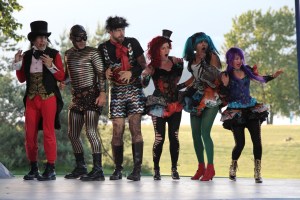
Artwork - Leigh MacRae
Artwork – Leigh MacRae

Welcome back Brawlers to the Bard Brawl! And I’m sorry.

It’s my fault (that’s me as in Master of the English Renaissance, Eric Jean) that you’ve been waiting so patiently for the Bard brawl podcast to return. There was this little thing I’ve been calling The %$#!ing Thesis™ which was gobbling up most of my days but now that’s I’m done writing about King Lear and Kurosawa’s Ran, it’s time to rock some Shakespeare!

You know, just for fun and stuff.

With holiday schedules being what they are, we weren’t able to round up a posse to press-gang a new play into service for the Brawl. We’ll get on that in the new year. Instead, we decided that we’d revisit a play in the spirit of Shakespeare’s Christmas holidays, Twelfth Night!

See, while we’ve got Christmas presents and New year’s eve merrymaking, Shakespeare’s Christmas was a twelve day, no holds barred bash where servants were free to poke fun at their masters, where people drank and ate to excess and everyone could just let loose for a few days before getting back to the business of day-to-day living. Think of it like two weeks at an all-inclusive where nothing has any real consequences and where the best state of being is festive drunkenness.

But before that, just a tiny bit of business.

The third edition of ‘Zounds! which was scheduled for late 2014 will instead come out in early 2015. While we had intended to do three a year, we’ve realised that putting together a magazine takes a bit of work and costs a chunk of change. Surprise. So instead we’ll go with two a year for now and see about getting some funding to ramp up production.

That’s good news for you though because it means that we’re still accepting submissions for the next issue which we’re calling Mad King! It also gives you time to go back and get the first two issues if you haven’t yet. Which you should totally do here.

If you’ve got an article or art submission you’ve been sitting on don’t bogart it, spread it around! Check out our submission guidelines here.

So as I said the first time around… waddaya say to a little bit of cross-dressing, mistaken identity and drunken merriment where no one dies and which doesn’t end with the kingdom falling into chaos? I thought so.

Take Sir Toby’s advice. This play is best enjoyed with a drink in hand. (Might I suggest an eggnog, a nice bourbon or some bubbly?)

Listen to or download the podcast.

Act 1, scene 1 starts with the Duke Orsino sitting around with his musicians, pathetically pining after Olivia. His servant Curio asks him if he will go hunting ‘the hart’ and Orsino tells him that he is already hunting the finest ‘heart’ that beats, Olivia’s. Punderful. (Harts, for reasons that should be obvious, came up pretty often in love poetry in the Renaissance. Here’s a pretty popular example from Sir Thomas Wyatt, a man who had the misfortune of loving the same woman as Henry VIII.) Orsino’s messenger, Valentine (really Shakespeare?), arrives and informs Orsino that Olivia would not see him but sends the message that she has refused to take on suitors as she wishes to concentrate on mourning her lost brother. Morbid? Not if you;re Orsino, apparently.

The next scene, scene 2, takes place on the coast of Illyria. (Here’s a link.) There has been a shipwreck and Viola is one of the survivors. With her, the only other known survivor, the captain of the ship. The captain tells her they are in Illyria, in the lands governed by Duke Orsino. As a single woman with no resources and allies, Viola realised that she is vulnerable so she decides the enlist the captain’s help to disguise herself as a boy-eunuch and offer her services to the duke until she can figure out more about her situation.

Sir Toby belch stumbles onto the stage at the start of scene 3. He seems to think that she’s spent way too much time and energy mourning her dead brother and that she should lighten up and start worrying about the living. Specifically, it seems that Sir Toby is trying to fix his niece Olivia up with a certain Andrew Aguecheek whose chief quality is that he has money, although it seems that he’s not very good at holding on to it. In fact, he’s a total witless and clueless loser without a thought of his own. He makes a complete mess of his meeting with Maria, confusing terms of address with her name. In fact, he gets totally pwned by Maria. More drinking ensues.

The next scene is a short exchange between Duke Orsino and ‘Cesario’ (Viola in diguise). Not sure what the hiring process was like but Orsino seems to believe that ‘Cesario’ will be able to gain access to Olivia because he’s got gorgeous boyish features… As a final aside before the scene ends, Viola confesses that while she needs to woo Olivia on Orsino’s behalf, she herself has fallen for him.

In this final scene of act I we return to Olivia’s house. It seem her clown Feste has returned from some trip. She’s in no mood to laugh, though she bears Feste’s barbs lightly. Malvolio seems annoyed by Feste but Olivia calls him out for taking himself too seriously. ‘Cesario’ (Viola) is announced at the door but is initially refused entrance. However, it seems that like Orsino, Olivia cannot resist young boyish pages ans she allows Viola to enter. Viola starts with her rehearsed speech from Orsino but the two women quickly get into a war of wits which seems, in the end, only to inflame Olivia’s desire for the messenger, not the message. She tells Viola that she refuses Orsino’s advances but that she would willingly love to have a Cesario of her own… Viola leaves but Olivia, in order to make sure that ‘Cesario’ comes back, sends him a ring which she claims he left behind.

As you usual, we’ll end this week’s post with a list presenting the major characters in Twelfth Night. Hope it helps though this play is nowhere near as confusing as Henry VI part 1 or Taming of the Shrew:

  • Duke Orsino: The duke’s a love-obsessed fool who start of the play madly in love with Olivia. Honestly, he doesn’t really do much besides pine and complain. By the end of the play, he’ll hook up with Viola instead.
  • Viola: The main heroine of the play, Viola washes ashore in Illyria and disguises herself as a boy – Cesario – who is a page to Duke Orsino. Of course, she falls in love with him but all he wants her to do is woo Olivia on his behalf. She has a twin brother who looks exactly like her. Like, exactly. Somehow.
  • Sir Toby Belch: Olivia’s rowdy, drunk uncle. He seems to be the ringleader of a small group of drunken merry-makers. He takes a special pleasure in mocking the uptight Malvolio.
  • Maria: Lady Olivia’s servant. She takes the initiative in mocking Malvolio, who she feels is too uptight and serious. She’s eventually shack up with Belch.
  • Sir Andrew Aguecheek: One of Toby Belch’s friends and a suitor to Olivia. He’s basically a spineless, blubbering moron who Toby keeps around to fund his drinking and make fun of.
  • Feste, the Clown: This is lady Olivia’s clown or jester though, really, everyone spends most of their time laughing at Malvolio. He’s often considered one of Shakespeare’s best clown characters.
  • Olivia: A widow in mourning… although she’s not really mourning her husband, but her brother. Anyhow, she doesn’t want anything to do with Orsino. However, he does find his servant ‘Cesario’ to be to her liking. If only there was some way that could work out…
  • Malvolio: Olivia’s chamberlain, his job is to care for Olivia’s house. So, that makes him a middle-management administrator. Of course, Malvolio sees himself as upwardly mobile and dreams of marrying Olivia… which leaves him wide-open to Maria’s pranks. Think of him as the ugly ancestor of the strong protestant work ethic.
  • Sebastian: Viola’s twin brother. To be honest, he doesn’t have much of a personality though Viola tells us that her Cesario is copy of Sebastien in manner and dress. So, basically, Sebastian is a poor (wo)man’s Viola.
  • Antonio: An older gentleman who cares for Sebastian when he washes ashore in Illyria.

So get ready for act II, where Jay Reid… er, Sir Toby has a few more drinks and this party really gets going!

Sonnet 48 read by first time sonneteer Eric Fortin.

(Also, how awesome is Leigh’s artwork for Twelfth Night?)

Stay in Touch Brawlers!

Follow @TheBardBrawl on Twitter.

Like our Facebook page.

Email the Bard Brawl at bardbrawl@gmail.com

Subscribe to the podcast on iTunes
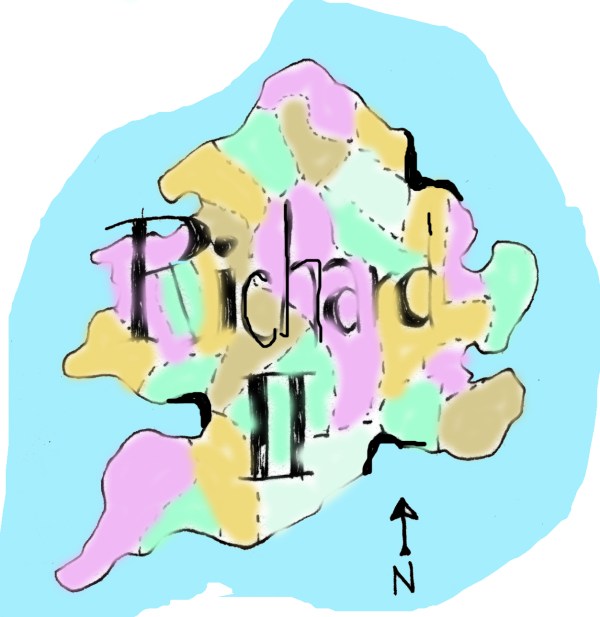
She’s the Man (2006), Andy Fickman (director)

Twelfth Night is fast approaching, so now’s the time to approach Twelfth Night. (See what we did there? Of course you did!)

In order to celebrate along with Shakespeare – and buy us some time while we get our act together for 2105 –  we’ll be reposting our Twelfth Night podcasts starting tomorrow.

Want to get back into the swing of things before our sweet voices hit your ears again?

We got you covered.

Check out Zoey Baldwin’s review of the film She’s The Man (an adaptation of Twelfth Night). And once you’re read that, watch the full film which we have so helpfully linked at the bottom of the page!

Enjoy and see you next time!

Zoey Baldwin

High school soccer movie She’s the Man’s hardly a match for Twelfth Night.

Twelfth Night, or What You Will—Shakespeare’s hilarious tale of mistaken identity and unrequited love—begins with a shipwreck on the shores of Illyria.

Or, in the case of the 2006 film She’s the Man, on the soccer pitch at Illyria boarding school. No one is presumed dead in this case; Sebastian Hastings (James Kirk (not the captain of NCC-1701-A)) has gone to London to play with his band without his parents’ knowledge.

After the girls soccer team at her school gets cut, his twin sister, Viola (Amanda Bynes), takes this as an opportunity to play soccer on her level—with the boys. And a wig. And a rather unconvincing voice timbre.

Viola hatches the switcharoo idea after her mother, who is dying for a debutante daughter, says, “Sometimes I think you might as well be your brother.” And one gratuitous salon montage underscored with an uppity chick rock cover of “You’re Gonna Make it After All” and complete with stick-on Yosemite Sam moustaches later, Viola sets her plan in action.

She tells each of her conveniently divorced parents she’s at the other’s house, and sets off for Sebastian’s new school. (Of course, this only works because no one at Illyria has met Sebastian yet.)

When Viola starts posing as Sebastian, she suddenly dons an awkward, half-southern accent and saying things like “Word, g-money.” Problems arise when her dreamy roommate, Duke Orsino (Channing Tatum) spots her tampons. To get out of the awkward situation, Viola sticks a tampon up her nose, claiming she uses them for nosebleeds.

Much like the play, Viola and Duke work out an arrangement. Viola will help Duke woo the gorgeous blonde Olivia (Laura Ramsay), and Duke helps Viola improve her soccer skills so she can make first string and kick her ex-boyfriend’s butt in the season opener. Too bad Viola is falling for Duke the whole time, and he thinks she’s her brother. Ruh-roh! Drama, drama, drama, happy ending ensues. I won’t spoil it for you.

There are a number of components in the film that could leave you scratching your head. Tatum’s Duke never seems suspicious that he’s living with a co-ed. I’m willing to suspend disbelief a little bit, but she’s not remotely convincing. The wig isn’t bad, sure, but how do the heart-to-hearts and awkward moments in the locker room not tip Duke off? And how does Olivia not realize she’s flirting with a girl?

As is the case with the original play, there’s no use trying to make sense of how a set of fraternal twins (of opposite genders) would be confused for one another. Or how when Sebastian suddenly returns from London/his watery grave, Olivia has no idea she wasn’t crushing on him all along. And so on.

This is all well and good. The play is not meant to be deep. But though the Bard’s original version is a light romp, it is filled with genuine laughs, pranks and chaos. She’s the Man, on the other hand, relies on kissing booths, debutante balls and chemistry lab partner dynamics. (Yes, Olivia falls for Viola/Sebastian in chemistry. What are the odds of that?!)


In addition to a fair dose of cheesiness:

a number of my favorite characters aren’t done their full justice—namely the staff in Olivia’s court like Feste, Maria, and the perpetually drunk Sir Toby Belch and Sir Andrew Aguecheek. True, in She’s the Man Duke has two teammates named Toby and Andrew, but they are in high school and, sadly, never drunk. (Just kidding! Stay in school, kids.)

We do get a solid dose of Malvolio in Olivia’s obsessive sidekick Malcolm Festes, but we never get to see him in yellow, cross-gartered stockings, which is disappointing. He even has a pet tarantula named Malvolio, which he pretends to lose in an attempt to prevent Viola/Sebastian from hooking up with Olivia.


The most famous verses work their way into the film, as expected, but it’s actually the only one that does. “Be not afraid of greatness: some are born great, some achieve greatness, and some have greatness thrust upon them” is used as a cliché line from Duke after Viola’s true identity is revealed in the middle of their season opening soccer game. A bit out of context, if you ask me, considering that we see that line in Malvolio’s big speech when he reads the letter Maria writes to fool him into thinking Olivia holds a torch for him.

You might be asking yourself, why should I support a celebrity who’s spinning off the rails? But people, this is Amanda Bynes pre-bizarre Twitter habits. Whatever she claims has not snapped inside her head definitely hadn’t snapped yet, so this movie’s pretty easy watching.

She was cute once! I promise. Any All That fans out there?

If Bynes’ presence puts you off, perhaps your attention might be redeemed by Channing Tatum’s irresistible charm. Besides Tatum, the only other beacon in the movie is David Cross (Oops. I mean David Cross) as Illyria’s overly friendly headmaster, Horatio Gold. But even an Arrested Development alum can’t fully rescue this awkward, unconvincing adaptation.

Plus, let’s face it, no high school Shakespeare film will ever touch what 10 Things I Hate About You did for The Taming of the Shrew. (Heath Ledger’s adorable serenade of “Can’t Take My Eyes Off of You” is forever burned on my brain.)

She’s the Man is pretty bland. I’d recommend it for sick days, if it comes on TBS or Bravo or something. Don’t go out of your way.

Stay in Touch Brawlers!

Follow @TheBardBrawl on Twitter.

Like our Facebook page.

Email the Bard Brawl at bardbrawl@gmail.com

Subscribe to the podcast on iTunes


What’s your best alternate title for Richard II?


The Bard Brawl workshop; September, 2014.

Check out past ‘Zounds!, and submit your own work for the upcoming issue.

IMG_1658


Stay in Touch Brawlers!

Follow @TheBardBrawl on Twitter.

Like our Facebook page.

Email the Bard Brawl at bardbrawl@gmail.com

Subscribe to the podcast on iTunes

Or leave us a comment right here!

Go back

Your message has been sent

Warning
Warning
Warning
Warning

Warning.

The fun of Serpents and Shylocks and Moors and Poe

Daniel J. Rowe

Christopher Moore’s menage of Othello, Merchant of Venice and the Cask of Amontillado  is so much dang fun that it would smite my place as a bard brawler not to recommend picking the book up and diving in. Just beware of sea monsters.

Christopher Moore gets from the Bard to Poe to a sea serpent in style in the Serpent of Venice

The story begins with three men waiting in Venice for a fool to arrive. The plot is laid for them to off the fool, so they can proceed to reap the bounteous fortunes that await them. They even took care of the monkey. One poisoning later, and the Fool is chained to a wall and being sealed in brick-by-brick by the father of the his sister-in-law. Ba-da-bing and we just got from William Shakespeare to Edgar Allen Poe and we’re only in the second chapter.

And the sea snake hasn’t even showed up!

Christopher Moore’s The Serpent of Venice is a great read that thumps from cover-to-cover with the funny, clever, sometimes really gross rhythm welcome on any Bard Brawler’s shelf.

The book follows the Fool (King Lear’s fool), as he wanders through a Venice haunted by a sea creature that does dirty things to the Fool and deadly things to those you want deadly things done to. The serpent is one of the few characters Shakespeare did not have in either of the plays the plot follows, but I’m sure the bard would have welcomed her presence. At least I hope he would.

Edgar Allen Poe’s short story kicks the story off, and the rest of the novel follows the plots of Othello and Merchant of Venice more or less with a cameo from Marco Polo.

Okay, now you’re showing off Moore.

The book is the ultimate response to the comment, “I want to read Shakespeare, but I don’t understand what’s going on.” The book is simple to follow, and incredibly fun. Iago, Othello, Antonio, Jessica, Shylock and Lorenzo are all there, and Moore is damn clever in twisting the plots together so it reads like one clear novel about a poor Fool trying to avenge the murder of his wife Cordelia? Yep, Lear’s youngest married the Fool in the end. Why not? The speeches are there, as is a general commentary on the plot lines complete with modern swears, sexiness and a bit with a monkey.

Moore also does what all who watch Shakespeare plays secretly want to do: scream at the characters and question their motivations. Why can’t enough be enough Macbeth? Why do you have to think so much Hamlet? Or as the Fool says to Othello in Moore’s book:

Fine. So you would accuse your lady of being untrue – your lady, who did throw all of Venice away for you, stood up to the most powerful men in the republic, for you, Moor,; she you would accuse, without any evidence but the comment of another, yet Iago, who you know to be a villain, a cutthroat, and a traitor – for him you need proof beyond my word? Respect my judgement in this, Othello, if in nothing else, or thou art a fool.

Yeah Othello. Think before you act.

The book also cleverly works in the soliloquies and famous lines from each play ad-libbing here and there, and adding reaction from other characters so that even those who don’t know a lick of Shakespeare will give that, ‘huh. I’ve heard that somewhere,’ or better yet, an ‘oh. I get it now.’

The Serpent of Venice was a joy to read. It adds the flare and seduction of the Bard with the page-turning joy of a clever modern fantasy tale. And how can you not be happy to read what happens to Lorenzo. I’m always sad when I hear sweet music indeed, Jessica. Boom.

The joy of reading Shakespeare is not always an easy sell, and so it’s a pleasure when someone like Moore comes along and makes it come off so easily.

I feel like Moore would be a great bard brawler, and thus could do nothing but commend him for his efforts with the Serpent of Venice. Those students struggling through either Merchant of Venice or Othello would do well to pick up a copy of Moore’s book, and you’ll be well on your way. Of course, you could always just listen to the Bard Brawl podcast, and that would do just as well. Either way.


Stay in Touch Brawlers!

Follow @TheBardBrawl on Twitter.

Like our Facebook page.

Email the Bard Brawl at bardbrawl@gmail.com

Subscribe to the podcast on iTunes

Or leave us a comment right here!

Go back

Your message has been sent

Warning
Warning
Warning
Warning

Warning.


Weather the Tempest and you will not regret the storm

Daniel J. Rowe

In the final trip to the Bard on the Beach for the Bard Brawl the Tempest awaited. It is an entirely unique play in William Shakespeare’s cannon and has the potential to be one of the most entertaining, provoking and touching. It can fall flat or be incredibly moving.

Did director Meg Roe pull it out under the tent?

To quote Omar from the Wire, ‘Indeed.’ (That was Shakespeare right?)

Meg Roe's Tempest finds the balance between wonder and soliloquy at Bard on the Beach. Photo credit - David Blue
Meg Roe’s Tempest finds the balance between wonder and soliloquy at Bard on the Beach.
Photo credit – David Blue

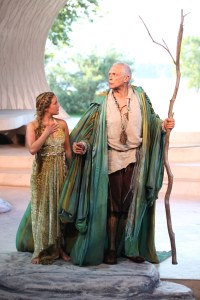
Roe’s Tempest executes the most difficult of things in live theatre: balance. The play bounces between incredible design, action, and intrigue and the subtle and powerful monologues of the play’s centre: Prospero (Allan Morgan).

Indeed the isle was full of noises, sounds and sweet airs that gave delight and did not hurt (wink), but first we have to get there.

Relinquishing solitude and embracing the brave new world is a wise model for theatre goers who should take in the Tempest. Photo credit - David Blue
Relinquishing solitude and embracing the brave new world is a wise model for theatre goers who should take in the Tempest.
Photo credit – David Blue

The staging of the opening ship wreck was very clever, loud, and set the play perfectly as it destroyed the ship carrying the King of Naples and left him and his crew on the island inhabited by the exiled wizard, his naive daughter and a sprite name Ariel (no, not that Ariel. She’s a mermaid).

The balance between stylized action and solitary poetry is the Tempest at its best, and Roe does not miss an opportunity to exploit this juxtaposition (even if she spells her last name wrong. Shouldn’t it be R-O-W-E?).

Morgan is great as the aging Shakespeare getting ready to say goodbye to theatre. Er I mean Prospero saying goodbye to the island and his daughter. He is lucky (or unlucky depending on your style), as he gets a handful of the most famous of Shakespeare monologues. You can bet there were a few nights when a few theatre grads had copies of the text in hand and mouthed along to:

Our revels now are ended.

These our actors, as I fortold you, were all spirits and

are melted into air, into thin air.

Gotta love theatre grads. Wait a second. Most of the cast is theatre grads. Forget I said anything.

The only thing I can ask for is what Morgan was able to give me. Even though the lines were familiar and I knew they were coming they still had that sad melancholy of an artist hanging up his quill. He made them memorable and meaningful. It’s especially difficult to draw and audience in to that level of intimacy after some of the spectacle scenes that preceded and followed the lines.

And the spectacle can’t be understated. Roe’s Tempest is full of some really incredible design and style that added as much magic to the island as any Puck infested forest.

Speaking of whimsy and wonder, Ariel (Jennifer Lines) has a dramatic and powerful presence throughout the play. She pulls a little Galadriel out in one of the most impressive scenes of the whole production. Shivers.

Go see the play. You’ll get it.

Props has to also go to the Miranda (Lili Beaudoin) as Prospero’s naive daughter flitting around the island after love of her life (you know, the third guy she’s met in her life) Ferdinand (Daniel Doheny), while having her eyes opened to the brave new world (wink) that awaits her. Oh that world is a bunch of conniving, back-stabbing, flaky aristocrats Miranda. Sorry. Welcome to reality. Have a wonderful wedding.

Trincula (Luisa Jojic) and Stephana (Naomi Wright) threw me off a bit, but showed their quality in the end; just like Faramir. The jester and drunkard were great at playing off Caliban (Todd Thomson), and gave the audience a more than a few laughs even if they were of the ‘ha ha she’s drunk’ variety. For me, I could have taken a little less from the scenes, but, hey, who am I to criticize what everyone else is enjoying? More poop jokes!

Ariel pulls out a little Galadriel in the midst of the Tempest, no complaints here. Photo credit - David Blue
Ariel pulls out a little Galadriel in the midst of the Tempest, no complaints here.
Photo credit – David Blue

Sitting waiting for the play to start both myself and my brother noted the set. The design was perfect. Not too much, not too bare. The players worked their way through the set with ease, and were able to shine and wind their way through the design. The trap door was used sparingly and to great effect.

On a side note I would like to congratulate myself for not geeking out when I saw sound designer Alessandro Juliani walk by before the play. It’s hard to resist bringing it up, and insist on going over some of the decisions Felix Gaeta made in season four of Battlestar Galactica. He used to come into a restaurant I managed in Vancouver about seven years ago. Very nice guy. What a great show.

The Tempest is one of those plays Shakespeare theatre troupes can’t resist adding to the bill especially in the summer. The play can be very entertaining or mind-numbingly boring based on choices the director makes and the performances that accompany. Bard on the Beach pulled this one off not adding too many overly clever bits and adding just enough style for the wow factor. Props to the cast and crew.

Do yourself a favour if you’re in Vancouver between now and the end of September and check it out.


Equivocation packed with energy and intrigue on the beach

Daniel J. Rowe

(Read in honest trailer voice) An attempt on the king’s life has been made, a plot is unveiled, the traitors are captured and the kingdom must be calmed. The hopes of all England ride one one man, a man who can sway the public and restore order.

He is…

A playwright?

William Shakespeare goes from writer to character at Bard on the Beach's production of Equivocation by Bill Cain. Photo credit - David Blue
William Shakespeare goes from writer to character at Bard on the Beach’s production of Equivocation by Bill Cain.
Photo credit – David Blue

Vancouver, BC’s Bard on the Beach sole non-Shakespeare written play for 2014 is Bill Cain‘s Equivocation, a perfect fit to the season even if the play is not a curtain-t0-curtain masterpiece. Director Michael Shamata puts on a thoroughly enjoyable and energetic piece on the Bard on the Beach studio stage.

Rather than the author of the play, William Shakespeare or Shagspeare (Bob Frazer) is the central character struggling late in his career to, well, write a play.

Think Shakespeare in Love, Jacobean Style.

In Cain’s play, we have the dark and serious playwright reflecting on a career built on piling up bodies on stage, rewriting courtly love, changing the nature of the theatre forever, and altering history with a hump here and there. He is under pressure to equivocate from political pressures in King James I’s court that want him doing more of what they want. They get it. The play is the thing. It can change things.

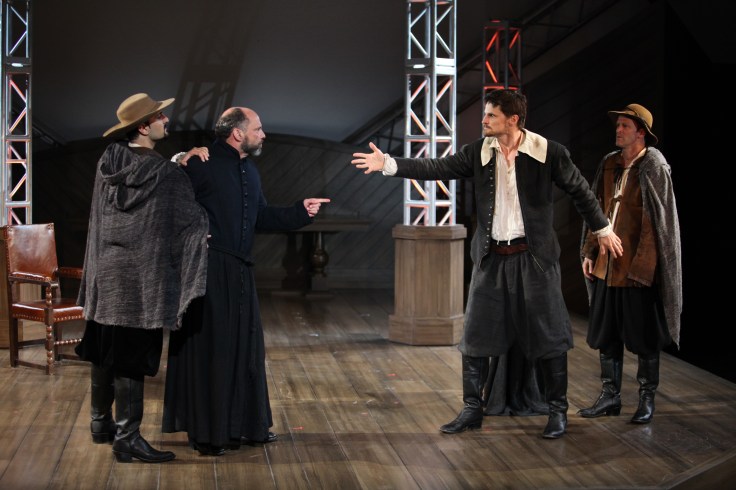
Shagspear (Bob Frazer) given lessons on the shady grey area of truth by Sir Robert Cecil (Anousha Alamian). Photo Credit - David Blue
Shagspear (Bob Frazer) given lessons on the shady grey area of truth by Sir Robert Cecil (Anousha Alamian).
Photo Credit – David Blue

The machiavell of the the play is Sir Robert Cecil (Anousha Alamian) who would like Shagspeare and his players to write the very current history of the gun powder plot of December 1605 in which a group of Catholics most notably Guy Fawkes (yes, the guy from V for Vendetta) sought to destroy parliament complete with the intolerant Scottish king in it. Can the greatest playwright in all of English history pull the play out, or is his quest for the capital ‘T’ truth to much of a barrier?

Who’s telling who lies? Who is really behind the plot? What are the characters’ motivations, and why are they motivated to act them out?

Consider the question central in the play:

The Spanish army invades England and a soldier is at your door asking if the king is hiding within. He is. Do you remain loyal to the crown and lie to save the king or do you tell the truth and betray he you swore to protect?

You may want to use the subtle art of equivocation.

equiv·o·cate

verb \i-ˈkwi-və-ˌkāt\

: to use unclear language especially to deceive or mislead someone

Thank you Merriam-Webster.

Cain, a Jesuit himself, is incredibly clever for the most part, weaving Shagspear’s crew of actors, King James’ politicians, clerics, and the playwright himself together to tell the incredibly complicated, but thoroughly enjoyable plot.

*Spoiler alert: he writes Macbeth.

Actors, like in Bard on the Beach’s Cymbeline, play multiple roles sometimes swapping costumes onstage. On the whole the players pull off the swaps with accuracy and style, and rarely do the roles blend into each other.

A chink that stood out in the armour of Cain’s play is the side plot involving Shagspeare’s daughter Judith (Rachel Cairns), whose scenes lack the energy and pop of the rest of the play. Cairns is a fine actress and it’s unclear whether the 21st century sarcasm her character broods the stage with is the fault of the script or the performance. I want to say it’s the former. The “I hate soliloquies” lines are a little weird as they’re typically uttered while she delivers her various soliloquies. There’s also an odd line near the end where she says that after “the Scottish Play” (ha, ha. Theatre people are superstitious about saying ‘Macbeth), her father only wrote six more plays. Six more? Those plays were Antony and Cleopatra, Coriolanus, Timon of Athens, Cymbeline, Winter’s Tale and the Tempest (maybe Pericles). King Lear’s also around that time. Just those six? I can think of a playwright or two that wouldn’t mind if that list was their complete canon. She is meant to be the Debby Downer to the Bard, and winds up being the same for the audience.

Judith (Rachel Cairns) struggles to keep the energy left on the stage by her fellow players. Photo credit - David Blue
Judith (Rachel Cairns) struggles to keep the energy left on the stage by her fellow players.
Photo credit – David Blue


The Judith scenes might have been a bit more forgivable if the rest of the play wasn’t so intriguing, full of fine pace, and entertaining. The scenes between Shagspeare and Cecil are very strong and bursting with wit, as is the theological back and forth between Shagspeare and Father Henry Garnet (Gerry Mackay). Mackay pulls double duty as Shagspeare’s forever partner and friend Richard Burbage, and is great in both roles.

Oh and there’s a few heads that get cut off on stage. Always dramatic.

Bard on the Beach was wise to chose Cain’s play for 2014. Having one play that addresses the man rather than the work is always a treat. Those in Vancouver who sit in the ‘I don’t really get Shakespeare’ lawn chair would do well to check this one out, as well as those who sit on the ‘what was it really like in Shakespeare’s time’ hardback chairs.

It gives a great glimpse into a vision of what the time may have been like, and the struggles of an author to produce work that is both true, poetic and will have lasting appeal.

You know, unlike a few parts of the Henry VI trilogy.


Would you equivocate for your king?  Photo credit - David Blue
Would you equivocate for your king?
Photo credit – David Blue

Puck to Bottom a Midsummer Night’s Dream pops

Daniel J. Rowe

Steam punk, Chuck Taylors, umbrellas, a lion and Daft Punk’s “Get Lucky,” and you’ve got yourself the ideal play by English Renaissance playwright William Shakespeare.

Wait. What?

Bard on the Beach, like almost every theatre company, just can't resist the midsummer allure of a certain play. Photo - David Blue
Bard on the Beach, like almost every theatre company, just can’t resist the midsummer allure of a certain play.
Photo – David Blue

The Bard on the Beach started its successful run as Vancouver, BC’s premier Shakespeare performance troupe with A Midsummer Night’s Dream, so it’s no surprise that in celebrating its 25th year, the players were at it again.

Actually, it’s no surprise that any troupe is doing the play during the summer; it gets put on a lot.

It’s glaringly obvious why. Midsummer has fairies, love triangles, wacky actors, and invites a style directors like Dean Paul Gibson can push and play with. Bard on the Beach has done the play six times now. Gibson’s done it twice. This one’s got a marionette.

A certain Brawler who may or may not be me, and another who may or may not be the other c0-creator of the brawl often gripe about the fact the play gets put on way too much. However, every time either of them read or see the play, they admit that it’s a pretty fun play. Gibson’s is no exception.

The Bard on the Beach production amps up the pop music, goes all-in on a melange of styles for the costumes, and misses no opportunity to push the whimsy and fun of the play. My dad and sister, who admitted to never liking Shakespeare, and who would rather pay for a six pack than a ticket to a play, both LOVED the production. My sister couldn’t believe how funny it was.

Purists poring over heavily dogeared and highlighted copies of the play probably will complain about Gibson’s use of Top 40 songs and some of the style choices. They complain about most things. Can’t please everyone. So it goes. Back to the library with you.

One critical friend of mine thought the choices bad, and suggested the director added the music to draw a bigger audience. Maybe. Then again, Midsummer always draws an audience.

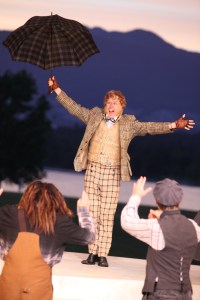
Founding Bard on the Beach member Scott Bellis steals every scene his has in Midsummer. Photo - David Blue
Founding Bard on the Beach member Scott Bellis steals every scene his has in Midsummer.
Photo – David Blue

Bottom (Scott Bellis) and Puck (Kyle Rideout) steal the show. Both actors chew up the scenery when onstage, and act head-to-toe with the energy that must make all directors feel warm at night.

Bellis, as ‘lead’ in the theatre troupe rehearsing for the wedding of Duke Theseus (John Voth) and Queen Hippolyta (Adele Noronha), is a standout missing no chance to push his farcical talents. His hair, makeup and costume only add to the character.

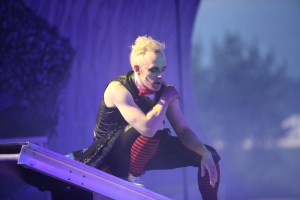
Rideout, as the fan favourite Puck, wears that tutu and pair of Chuck Taylors like a pro. Though purists will not appreciate the selfie he takes when accidentally self-medicating with a love potion herb, the audience loved it. In a particularly clever scene as the play is coming to a close that even the ultimate purist will appreciate, Puck mimics walking a tightrope down the middle of the stage cleverly highlighting the fine line between chaos and normalcy, love and hate, reality and fantasy, theatre and the real world: brilliant.

Eyeshadow, check; striped tights, check; tutu, check; time to play Puck. Photo - David Blue
Eyeshadow, check; striped tights, check; tutu, check; time to play Puck.
Photo – David Blue

The official program describes the plot as such:

Oberon, King of the Fairies, is upset with Queen Titania. He commands his servant Puck to produce a magical nectar that will cause love at first sight. The mischievous sprite arranges for Queen Titania to fall for Bottom, a simple weaver (now transformed into an ass) while hilariously misdirecting the affections of four runaway lovers.

Nothing is untrue in the description, but the more experience one has with the play, the more one gravitates to Bottom and Puck, and whatever they’re doing. The Lysander, Demetrius, Hermia, and Helena cat-and-mouse/love potion stuff is fun, but is upstaged by Bottom and Titania (Naomi Wright), and their wierd fairy-loves-donkey, Puck orchestrated subplot. I won’t lie. Writing that sentence was fun.

Gibson also chose to stage the “Indian boy” as a marionette puppet, which was a very clever touch even if it was a little confusing to some in the audience like my dad and sister, who hadn’t read the play. The choice added to that blurred line between reality and fantasy the play is always treading.

The purist in me (yes he is there scowling and shaking his head all the time) did have a touch of pshah at the opening scene when Theseus delivers the following line as if he’s Romeo:

Hippolyta, I woo’d thee with my sword,
And won thy love doing thee injuries;
But I will wed thee in another key,
With pomp, with triumph, and with revelling.

I tried this line on a girl once. Big mistake. Not a ton of romance there.

Bard Brawl Sonneteer and ‘Zounds! contributor Maya Pankalla told me the other day the play was her favourite.

‘It’s just so me,’ she said.

Those that know this particularly talented recently married brawler/zoundser (sorry boys) will get it right way.

For those that don’t: Midsummer is a must see for all who like the bard, fairies, whimsy, comedy, romance, and donkeys whenever it is produced. The Bard on the Beach production adds marionette aficionados to the list, and pulls the whole thing off with style.

Go see it. You have until the end of September.

The fairies of Midsummer may draw you further towards chaos than you are comfortable with. Bard Brawl advice: let them. Photo - David Blue
The fairies of Midsummer may draw you further towards chaos than you are comfortable with. Bard Brawl advice: let them.
Photo – David Blue


A conversation with the director, Cymbeline

Daniel J. Rowe

Anita Rochon took on Cymbeline in all its facets from comedy to drama to action to romance and all else in between. Photo Credits: Rachel Cairns as Imogen Photo & Image Design by David Cooper & Emily Cooper
Anita Rochon took on Cymbeline in all its facets from comedy to drama to action to romance and all else in between.
Photo Credits: Rachel Cairns as Imogen
Photo & Image Design by David Cooper & Emily Cooper

The 2014 Bard on the Beach run included the not done often play Cymbeline. It’s a dramatic and exciting play that bounces between comedy, drama and sometimes shocking plot turns, and is one of the Bard Brawl’s favourites.

Director Anita Rochon discussed the production with the Bard Brawl.

Bard Brawl: Why did you pitch Cymbeline (to Bard on the Beach)?

Anita Rochon: It was a couple of things. It was a play that was really interesting to me and also interesting why it isn’t done very often… The last time it was done at Bard on the Beach was 2002, so I also saw that it wasn’t done in a long time, and with the particular casting breakdown I was working with, which was one women and five men (I asked for a sixth) because we were paired with Equivocation, I had to work within a particular cast breakdown, and I saw that Cymbeline had this women who was at the axis point of all these different narratives, so she really was the centre. That was a play that I could imagine staging with a smaller cast and having a women at the centre of it all.

BB: What was the direction you were trying to lead this play?

AR: One of the motifs and themes that was very strong for me in reading it was the idea that one can change. The idea that you may get forgiveness, that you may get a second chance. So the idea of changing, and changing identity, and not just going in disguise – as happens in a lot of Shakespeare’s plays – but even the idea that you sometimes have to change your idea of who you are in order to keep living in a way that’s satisfying, but also to receive forgiveness is something that I really emphasized, and took it quite literally to this idea of people changing identities right before our eyes.

BB: The one thing that I was surprised with was in the first half of the play, it was a lot lighter. Cloten and his mother, there were a lot of laughs where you or they pushed the humour. Was the difficult to rectify seeing as how dark it (the play) gets at the end?

The ensemble guides the performance of Cymbeline.  Photo credit - David Blue
The ensemble guides the performance of Cymbeline.
Photo credit – David Blue

AR: I think what every director does is just try and do what the playwrite is telling us to do, and so that’s what I was trying to do. I didn’t feel like I was attempting to push any humour. Shakespeare has written those weird scenes between Cloten and the lords where you get such a clear dynamic of how the whole kingdom thinks of Cloten, and the queen has those fantastic asides to the audience. She’s really written like an evil stepmother in fairytale tradition.

So many speak about how it’s such a crazy play, and has so many things: comedy, romance, drama, tragedy. The only way that I could understand dealing with that was just playing everything for what it’s worth. Just playing everything for how it’s written. We can’t squeeze the whole thing into being a comedy; why would we try?

I think there is a precedent for that now, we’re used to that now with shows like Game of Thrones or probably better example would be Breaking Bad where sometimes you have these scenes that are almost clown-like and then you have high drama, and then you have a stylized scene. A show like Breaking Bad has all of those things, and so I just tried to commit to each scene from what I understood from each scene and put them all together with a container of this ensemble telling us this story.

We see the ensemble coming out presenting themselves, presenting the narrative they’re about to tell us, and then, at the end, with that little button where Rachel Cairns (Imogen) takes centre stage again and finishes up the play, and then throughout with the ensemble sometimes sitting upstage, I just had to believe that the ensemble telling us the story that contained comedy, contained tragedy, contained drama, that if I played each scene for what it’s worth and asked the actors to do the same that we’d be okay.

BB: Everything in the production is almost monotone, greys and beiges, as far as the design goes, but the tempo is very fast. They move quickly. How did you get all of these elements to work together.

AR: I think I took it similar to how I was saying I took the scenes scene-by-scene. I probably took all the elements element-by-element. The costumes for instance, we based them off of fencing uniforms, for three reasons. I wanted the ensemble to feel like a team. I wanted them to feel athletic. I wanted the production from the very beginning to feel athletic and muscular and fast-paced, and sometimes masculine, but with a feminine presence in there. Certainly the Rome scenes I wanted them to feel masculine, so that kind of athletic, nimble feeling was a priority for me. I began to think, we need a base costume because they’re switching between all of these different characters, so what can I have as a base costume? The worst idea would be a black turtleneck and black pants.

I was scouring all these books, and I came across this amazing image of a fencing uniform from 100 years ago, and I thought, ‘this is really interesting’ because we immediately associate it with a particular time. It feels a little bit old timey without it feeling specifically old timey. It references a period without it saying, ‘this takes place in 1409.’ Yet it encapsulates a little bit of that team feeling, that play fighting feeling, that we’re going to play at something in front of you. Of course, fencing is in preparation for a real fight. Like this play is a representation of a reality or a true story.

In terms of colour, we just wanted a fairly neutral palate, so that those other costumes could live off of there, but also be complimented by it, and of course, fencing uniforms are in those light grey tones.

In terms of the set, I was really interested in highlighting the theatre in its raw form, so the stage really nice and bare, and we used similar material…

I kind of just went element-by-element, and then try to keep the look of it all similar. Keep it all clean and always ask myself, what is the essential here. Let’s try and boil everything down to its essential and not have a lot of extra props and extra props and extra sets.

Anita Rochon artistic co-directs The Chop in Vancouver with Emelia Symington Fedy, which has produced numerous new works including KISMET one to one hundred and How to Disappear Completely which continues to tour internationally. She frequently collaborates with some of the city’s most celebrated companies including Theatre Replacement, Théâtre la Seizième, Vancouver Opera and Electric Company Theatre. She is a graduate of Studio 58 (Acting) and the National Theatre School of Canada (Directing). Anita is the recipient of a Siminovitch Protégé Prize and a Mayor’s Arts Award.


Bard Logo triangle


Repercussion Theatre’s Harry the King, Directed by Paul Hopkins

Repercussion Theatre's Harry the King coming to a park near you until August 3rd!
Repercussion Theatre’s Harry the King coming to a park near you until August 3rd!

Eric Jean

In case you didn’t know it yet, Repercussion Theatre is proving that Henry IV parts 1 and 2, and Henry V are damned funny.

Like bust-your-gut, pop-a-button, get-dirty-looks-on-the-Metro-because-you’re-laughing-so-damn-hard funny. And, as my wife Rachelle “The Butcherette” can testify, that’s if you don’t understand a word of Shakespeare besides ‘Zounds!

I know you’ve just verified our chronology of Shakespeare’s plays on bardbrawl.com and were getting ready to write an angry email about how we obvious morons have left out one of Shakespeare’s great, immortal and immutable work: Harry the King

“Peace!”, says this moron!

See, here’s the deal with this summer’s edition of Shakespeare in the Park: Harry the King is actually a play adapted from Henry IV parts 1 and 2 and Henry V. Specifically, it grabs up a bunch of the bits involving prince Harry’s rise from being a good-for-nothing lay-about who spends all of his time in Eastcheap’s taverns drinking with his buddies to his ascension of the throne and eventual conquest of France.

At least that’s what it looks like at first but the whole thing never actually makes it out of the tavern.

The entire play takes place inside the tavern with Hal, Falstaff, Mistress Quickly, and company playing out all of the roles in Hal’s story. As such, you’ll see actors doubling up on roles in the same scene, frivolous funny voices and accents, whimsical posturing and funny walks, criticism and praise of the actors performances and of course off-the-cuff comments about what’s happening to the audience who is a stand-in for the other tavern patrons.

So really, the whole thing is like an epic and uproarious Bard Brawl on stage if the Bard Brawl had a budget, some sound and lighting equipment, a stage and a live audience!

On an unrelated note, we still have a donate button and plenty of copies of ‘Zounds! for sale.

If you’re a purist who likes their Shakespearean histories untouched, their iambic speechifying solemn and formal, and their Salic law needlessly obscured and overly complicated to all except for those 2 guys in the front row who have been involved in 15th century Renaissance re-enactment for 20 years, maybe this won’t be the production for you.

But if you’re a person with a pulse and at least a few friends, particularly if you are a person subscribed to the Bard Brawl, there’s a good chance you’ll be thinking to yourself as you fold up your lawn chair or picnic blanket: “Well that was well worth the price of admission.”

Shakespeare in the Park is free so that was a free joke. (You’re welcome.)

But don’t be like that guy who refuses to tip: Repercussion Theatre lives on donations so when the actor who just made you pee your pants at the end of the first half of the play comes by with a hat during the intermission, hide your shame and drop a few bucks in please. (Or you can click here and donate.)

Pack up your cooler with a few snacks and a couple of drinks, bring a blanket and go see Repercussion Theatre’s Harry the King in a park near you before it’s too late! I won’t come to your house and force you to go see this (because I don’t know where you live, mostly), but I’ll just leave this last remark here for you to do with as you please.

This is the one play that made my wife say, for the first time ever since I have known her: “I want to go back and see it again!

The Harry the King tour ends on August 3rd. You can check out Repercussion Theatre’s website for dates and locations of upcoming performances.

Stay in Touch Brawlers!

Follow @TheBardBrawl on Twitter.

Like our Facebook page.

Email the Bard Brawl at bardbrawl@gmail.com

Subscribe to the podcast on iTunes

Or leave us a comment right here!

Go back

Your message has been sent

Warning
Warning
Warning
Warning

Warning.

Launch Party – ‘Zounds! Act I, Scene ii: “T”

Brutopia Brew Pub - 1219 rue Crescent, Montreal, Quebec H3G 2B1.
Brutopia Brew Pub – 1219 rue Crescent, Montreal, Quebec H3G 2B1.

It’s been a few months since the last time the Bard Brawl threw a brew pub bash but the wait is finally over!

We’ve got something to celebrate: the latest issue of ‘Zounds!, which we’ve called Act I, Scene ii: T, is finally ready to be unleashed upon the world!

We want you to come get your Bard on with us at Brutopia, on Thursday, July 10th, starting at 8pm!

You know the place. Looks kind of like this but rowdier!

A party space Falstaff would be proud to get drunk in!
The only thing missing in this picture is you, beer and ‘Zounds!

Once again, we’ll be offering copies of the latest issue of ‘Zounds! for a special Brawler price of $10 each for anyone in attendance.

We’ve also upped our game this time and in addition to some great ‘Zounds! readings, Brendt Thomas Diabo will provide some awesome live drinking music!

If you’re planning to come by – or would like to but can’t because you’re busy working on your pick-up monologues – why not swing by our Facebook Event page and let us know? And while you’re there, why not spread the word? We’d really appreciate it!

Hope we’ll see you there!

Stay in Touch Brawlers!

Follow @TheBardBrawl on Twitter.

Like our Facebook page.

Email the Bard Brawl at bardbrawl@gmail.com

Subscribe to the podcast on iTunes
Or leave us a comment right here!

Go back

Your message has been sent

Warning
Warning
Warning
Warning

Warning.

Up ↑