‘Elements of the Bard of Avon’ uses the periodic-table as the structure to show information about his plays, some of his greatest characters and elements of his greatest speeches.
This slideshow requires JavaScript.
I spend a great deal of time in the wonderful British library, researching my subjects from books to films to sports.
Johnny Joannou am a London based designer. He focuses on producing geeky prints. He tries to categorise and arrange key metrics and then use an appropriate colour palette to communicate information aesthetically.
‘To thine own self be true’ shows his work in 37 segments. Each of the 37 segments shows the name of the play, the year he started writing the play, the genre and ten memorable characters. It also includes the number of characters, speeches, acts and parts for each play. Part of a quote from each play flies out of each segment!
“To thine own self be true.”
I spend a great deal of time in the wonderful British library, researching my subjects from books to films to sports.
Johnny Joannou am a London based designer. He focuses on producing geeky prints. He tries to categorise and arrange key metrics and then use an appropriate colour palette to communicate information aesthetically.
Funny, witty, and with a taste for the classics. Yep. Sounds like a brawler.
The idea of her comic strips, much like ‘Zounds! contributor Mya Gosling with her Good Tickle Brain, is to take history, literature and art and make them clever, fun and funny. She takes subject matter from mainstream and lesser known histories, as well as classic literature (and a bit of Batman).
Beaton is very funny and nerdy. It’s like she was meant to be a brawler. What she does is very clever.
Take a historical or literature subject
Draw them in a funny but not mocking manner
Make sure to show to the nerds that you know what you’re talking about in the strip, but also make it easy to understand for those who are not a masters of the arts like someone I know
Make it funny
Does she pull it off?
Yes she does.
There is not too much of the Bard in either book, but there is a rad one on MacBeth that I really liked.
There is so much funny in this that I’ll leave it to you readers to post them in the comments below. The books derive from her popular website that is well worth killing an hour or two at while at work.
I actually laughed out loud at times reading Beaton’s two books.
At the bottom of each series of strips, there’s a bit of her thoughts on say, Edgar Allen Poe, Sir John A. MacDonald, the Tudors or Kokoro (you may have to look that one up, but I’m really hoping you don’t. Such a great book).
Here’s her take on Macbeth:
They say the real Macbeth was a pretty decent fellow and a good ruler, and he’d probably have a bone to pick with Shakespeare over character assassination. He’d have to get in line behind Richard III though, whom I have heard (from certain Elizabethan sources) was an ugly hunchbacked troll.
Very clever.
She would fit in well at a brawl indeed. We’ll sit her between Nick and Brooke and just let it go from there.
Want to watch an excellent play full of life, energy, violence, intrigue, decapitation and romance and make it boring? No? Neither did I.
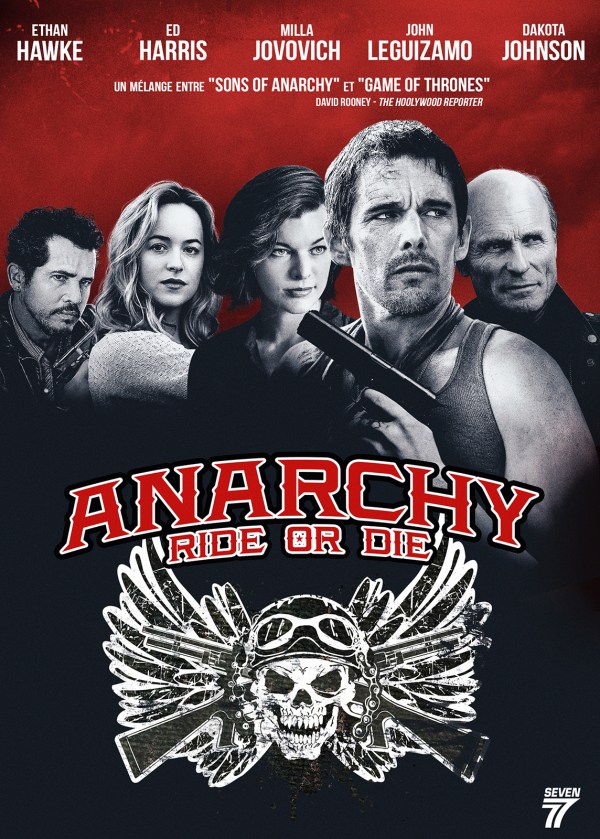
That’s why Cymbeline, the biker/cop adaptation of the Shakespeare play of same name that could have been oh-so-cool, was so disappointing.
How did this happen?
The idea for the film had everything you want in a Shakespearean adaptation: good play, good idea, good actors and nice set pieces, and yet, it failed in almost every respect.
Without getting into specific plot points, let’s just say there are fights, prodigal sons, almost rapes, poisoning, faked deaths, hide-and-go-seek games, and a chopped off head.
How did this film fail?
First, the delivery of lines.
Anyone not entirely sure what the term “vocal fry” means will have a definitive answer after watching this film. The cast, almost without exception, mumble, grumble and sometimes whisper their way through lines I guess in an attempt to make sure everyone knows they’re a tough sort used to rumbling through life. You know, like motorbikes. Sort of.
Vocal Fry:
In speech, a low, scratchy sound that occupies the vocal range below modal voice (the most commonly used vocal register in speech and singing). Also known as vocal fry register, creaky voice, pulse register, laryngealization, and glottal fry. (See Examples and Observations, below.)
David Crystal notes that American actor Vincent Price “produced excellent creaky voice in his especially menacing moments” (A Dictionary of Language, 2001).
I kind of hoped there would be a bit more energy to the characters. It’s not like there is not energy in the lines!
The film’s stars never seem to have any passion while speaking, and there is a good chance a few snoozes could be had while getting through the film.
All of the actors seem good fits for the roles. I mean Dan Humphrey on Gossip Girl is practically Posthumus, and wouldn’t you know it, Penn Badgley plays him. Just cut and past, and swap some dialogue. I won’t lie, when Dan and Serena van der Woodson broke up I stopped watching. Their love was just so real and perfect. Dangit TV! Why do you ruin everything. Then again, they might have got back together in the end. Maybe I should finish watching the series.
Where was I? Oh right. Shakespeare.
Imogen as well is lacking, but maybe I was spoiled by Lily Rabe’s stellar performance in the park this year. Johnson, however, is very drab.
And then there’s Iachimo, a very creepy and crazy character. I was expecting a lot out of Hawke given the quality of his performance in Hamlet. He was dull. I was sad.
Anton Yelchin as Cloten is perhaps the biggest disappointment. Cloten is one of Shakespeare’s most underrated characters. He can be buffoonishly funny, terrifyingly dangerous, or menacing depending on how you play him, and Yelchin is none of these.
The Queen is played by this woman, and has to be called out as a miss. She is on screen very little and given so few lines that it’s unclear what she did, why it mattered, and how her plot was foiled.
John Leguizamo‘s in it too, and adds another ‘guy who was cool in other Shakespeare play, but dull in this one’ credits to the film.
Argh. I know all of these actors are better than this, and I DEFINITELY know the play is better than this.
Second, direction.
This, I don’t understand. Almereyda did a kickass version of Hamletin 2000, and the hope was that he’d be able to bring the same energy and style to one of Shakespeare’s weirdest and most interesting plays. He had the actors for it, but the film just didn’t wind up picking up any steam. It lacked energy and style, which is baffling as the concept had both.
Even the scenes of violence, confrontation and passion play out very low key. By the end, there is little impact when prodigal sons return, heads are lopped off or doting and devoted husbands prove their infidelity.
You want to see this play, and you want to see it done right, and Almereyda fails. This makes me sad.
Other things.
The constant scene and locale changes don’t help those trying to piece together what is actually a very complicated plot. It’s hard to connect with any of the characters when they get very short scenes, mumble their lines, and have no emotion be it humourous or dramatic.
The bikers aren’t that badass, and the cops don’t have the intimidating power due to Rome. The film is a miss, and, for someone who anticipated its release so much, discouraging.
It was original released as Anarchy, Ride or Die, which is a pretty dumb title and doesn’t really make any sense when you think about it. The story is more about controlling and asserting a state’s existence within an empire.
Please make another version of this play. It deserves it.
Roslyn Willson contacted the Bard Brawl promoting a infographic that shows how much influence the bard has had on popular culture. Without further ado…
Oh dang. Watching American Horror Story Freak Show the other night, I realized, after seeing the always charming, chilling and a little bit creepy, Lily Rabe, that I had neglected to post the review I wrote in the summer of Cymbeline in which she starred. Twenty-eight lashes and three monologues of private lamentation later, I thought, why not just post it, and remember warm nights in the summer and brilliant productions of the bard.
Here it is.
Photo before the performance. I obeyed the rules and put my phone away during.
I have always, always, always wanted to see a play in Central Park, NYC. It’s one of those things all bard brawlers must do at some time, and, thanks to a lovely person from New Zealand, I got a couple of tickets. Oh, and I took a friend who had never been to a Shakespeare play before! So many lovely things right there.
(My friend Rene won the free tickets and gave them to me. Such a darling)
First off, the opening of the play was great. Director Daniel Sullivan has those “turn off your phones” guys both welcome people, and thank sponsors (people actually clapped for the Bank of America. Weird). Then, the cast came out on stage and real audience members asked questions to get the crowd into the play, and, BANG, play starts. So smart. The effect was perfect. Everyone was laughing and ready to get set for what is a very strange and great play.
Rabe and Linklater were great.
Rabe has this incredible ability to be beautiful, and tragic, and funny, and weird all at once. A think I loved about her performance in Cymbeline was the way she moved. She didn’t do that predictable puffed out chest, “Victorian” stance that I seem to see so often in Shakespeare productions. She moved more hunched over and slinky, so, while she definitely commanded attention on stage, she also gave the character a bit of needed vulnerability.
Linklater was side-splitting hilarious as Cloten, as well as mopey, love-torn, romantic as Posthumous. A particularly incredible scene featuring both leads was the “Hark, hark the lark” song, Cloten serenades the girl who is “supposed” to love him! Why don’t you love Cloten?! It’s perfect.
Linklater even was able to make the particularly troubling speech about killing Posthumous and raping Imogen ridiculous and funny. He delivered the intense line with the false bravado of a 14-year-old spazz, and thus could be laughed at without feeling horrible that you’re laughing at some pretty gross stuff. Hey. Dark comedy is still comedy am I wrong?
Patrick Page was also great as Iachimo; full of energy, conniving spirit and all of that fun stuff. Actually, pretty much every cast member did their job and did it well.
The set was very well-built. Props for making sure it was whimsical, but not overbearing. A single circular platform that came up from the floor was the only moving part, which was effective and gave a nice throwback to the Elizabethan trapdoor trick.
Oh, and a racoon scurried onto the set during the production I went to. It was delightful, unplanned, and had nothing to do with the play, but, hey, animals should always get a nod if they happen to show up. I’m pretty sure the racoon just wanted to catch a bit of the play. Why wouldn’t he?
Sometimes, the title just makes you want to grab the book. I feel like there are few titles less tempting than IDW Publishing‘s comic series Kill Shakespeare.
I mean, dang, it’s called Kill Shakespeare!
Even the haters got to like that one.
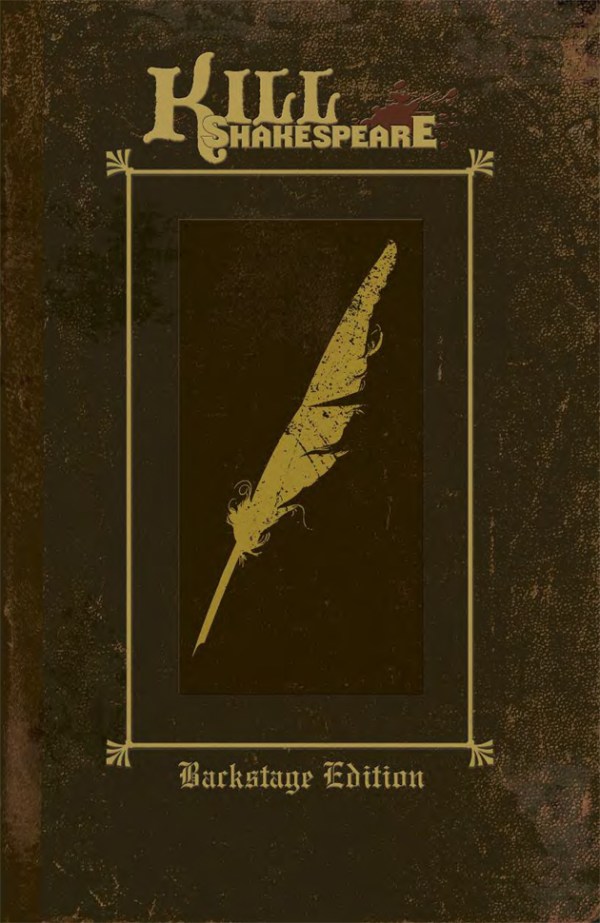
I know for a fact, the true brawlers will like the series created and written by Conor McCreery and Anthony Del Col. We’ll wait for Eric’s review of the next four issues to find out for sure, but I’d put smart money on him liking it. We’re going to break the series down by issues of four, and we’re reading out of the slick “Backstage Edition,” which is a finely packaged piece in itself.
Props to the art by Andy Belanger, and the covers by Kagan McLeod.
In issue one we’re introduced to the Shadow King, Hamlet (naturally), who is shipwrecked and washes up on the shore of Richard III’s kingdom that he rules with MacBeth (well, more like Lady MacBeth). I’m going to try to stay away from plot points, as I would rather not ruin the joy of getting introduced to the various Shakespearean characters in new and fun ways. And, no, I’m not talking about them being cast as steam punk robots or high school sweethearts. (Not that there’s anything wrong with that).
The series starts well. There’s a shipwreck, a ghost, good art (the panels with the swords coming out of the water are great), comic-style voice over, pirates, mystery and magic.
The first issue gets you hooked in, and a classic line to end. It establishes that these are Shakespearean characters, but this is a different world.
The idea of Hamlet having to kill Shakespeare to bring his father back to life is a nice touch.
Bonus about the backstage edition: there are character and line descriptors at the end of each issue giving those without an encyclopedic knowledge of characters a taste of the original text.
Characters introduced: Hamlet, Rosencrantz & Guildenstern, Richard III, the Witches, Lady Macbeth
Enter Ratcliff, and others, as well, as new locales, new intrigue and more about this civil war between RIII and Juliet. Tell me I just didn’t sell you on that last sentence. What’s nice about the series is that characters come into play in different ways. Sometimes, they just show up, and sometimes they’re alluded to previously.
Iago shows up, and is very well written. We all know he’s evil, but we only know that because we’ve seen Othello. What if he’s part of a story that includes other cruel and conniving characters like R III and Lady Macbeth? How does he fit?
Read a find out.
Also, we have the introductions of the “prodigals of Shakespeare” adding a lovely touch of superstitious masses mixed with nerds that obviously really love the bard. Hmmm. Do I know any of those types?
The writers do a clever thing where they add Shakespearean lines or scenes into different situations. Richard III does his best Cornwall impression and takes some poor guy’s eyes out, while Iago ironically delivers the gem, “keep up your bright swords… or blood shall rust them” riffing on my favourite of Othello’s catchphrases.
Characters added: Ratcliffe, Iago, Falstaff (naturally), Tamora, Angelo, and Hastings.
“The fool doth think he is wise, but the wis man knows himself to be a fool,”
– As You Like It, V,i
Alright nerds. Get ready for some boobs. It’s a sad fact about comic books that they focus particular attention to the vivacious curves of the well-endowed, and Kill Shakespeare is, unfortunately, no exception.
Yes, I like boobs like the best of them, but I mean come on. Every female character in a comic book does not have to have huge knockers no matter if they are the Merry Wives of Windsor or Lady MacBeth.
Ok. Rant done. Feminist inside of me argued for.
The Fallstaff/Hamlet scenes that take up a few pages in this issue are very fun, and one of those great ‘what ifs’ of Shakespeare. What if Fallstaff’s bombast was paired with Hamlet’s melancholy. A great what if answered in issue three. Also, what if Richard III and Macbeth were sitting at a table together? Answered.
Puck (Robin Goodfellow) shows up and his design is great. This is what makes comics fun: no reliance on human actors.
I should give a belated shoutout to colourist Ian Herring. His work stands out in the comic series.
And, dang, if Connor McCreery and Anthony Del Col go right into Poe-land, where Christopher Moore did in The Serpent of Venice. It’s a killer ending, and I won’t ruin it. I will, however, point out that Moore’s book came first. I’m not saying the idea was stolen, or that it doesn’t work every time, but still…
Dang.
Characters added: Macbeth, Puck, Titus (referenced), Olivia
Great first page. Well drawn, well coloured and well executed.
Nothing makes a comic hum like a great first page.
The continuation of cross-dressing from issue three is a nice add to the story, as you can’t have Shakespeare without a little Gender Bending. Hey ho. Have you bought your copy of ‘Zounds! yet? I don’t know why I just thought of that. Hmmmmm. Click here.
Again, the writers are careful to hold characters back, so that we get humdingers like in issue four when probably the best ‘what if’ turns up when Juliet is paired with Othello. Yes! Can’t say I don’t dig that. Oh, and see how Juliet is designed? More of that.
Also, the weaselly Parolles is a great addition, as is Nerissa.
This is the first look at the other side of the civil war (although I feel like there may be more than just two sides). Much of the issue is build up with a very well-done payoff in the end. The close ups of Othello and Don John are nice, and when Othello lays eyes on Iago, even better. It’s an amazingly designed page with all the passion and emotion one would expect from the two if they were to see each other after the play Othello is finished.
There’s a reason why Othello is one of the Bard Brawl’s favourites. The characters from that play always add a huge chunk of amazing.
Characters added: Juliet, Othello, Parolles, Nerissa, Robert Shallow, Don John
Courtesy – IDW Publishing
Courtesy – IDW Publishing
Courtesy – IDW Publishing
Courtesy – IDW Publishing
Come back next time when Eric continues with issues five through eight of Kill Shakespeare.
Whistling, snapping, switchblade fights, pastel sweaters, slacks, gelled hair, soda pop shops, black faced Puerto Ricans and a bunch of teenage thugs singing. Yep. We must be talking about the most famous adaptation of William Shakespeare’s Romeo and Juliet:West Side Story(insert whistle riff).
Jerome Robbins and Robert Wise’s 1961 film version of the musical is full of colour (Technicolor even), long panning shots, clean and arm-swingy choreography, bright blue eyes, and everyone’s favourite feature of 60s era film with racially specific characters: face paint.
It’s the kind of makeup choice that just makes you want to ask, ‘why oh why didn’t you just hire an actual Puerto Rican actor?’
So it goes. It was 1961. It won the Academy Award for Best Picture.
Face paint aside, we brawlers have to ask: is West Side Story a well done adaptation of Shakespeare’s most misunderstood love story? That being done, you have have to ask if this movie is very good, and if it is something that sustains the test of time.
Does it?
It is actually a very fun movie, and the directors are clever with their choices of shots, colours, characters, sets and style. The deep zooms, pans, close ups, and trick where one character is in focus while everything else is blurry are all very nice. The movie is colourful and crisp and clean and always nice to look at.
Now, if you do not like musicals, you will not like this movie. I go through times where I really don’t like the Leonard Bernstein scores, and then I hear a tune in the car on the radio, and can’t help but turn it up. In the end, I think I will submit, suck it up, and say that I do like the songs.
The acting is overall pretty good. Richard Beymer (Tony) is the… Wait a second. Is that Benjamin Horn from Twin Peaks? Yes it is. And is Riff Dr. Lawrence Jacoby? Indeed he is.
Allow me to indulge for a second.
Man that show’s fun.
I wonder if Shakespeare would like Twin Peaks? I wonder if he would like West Side Story?
I want to say yes and maybe.
The thing that hurts the musical is the romantic and idealized love story – that is in R&J – with no hints at the irresponsibility of the teenaged characters. As discussed in some legendary Bard Brawl podcasts, Romeo and Juliet is full of lines and situations that suggest the romance is nothing but an irresponsible romp by two hearts that are bigger than brains of teens who fall hard and fast with tragic consequences.
Ok. Rant done.
I will say those Tony – Maria songs are borderline unwatchable. You know that’s not even Benjamin Horne singing? Weird. It hurts me to say that Maria (the lovely and late Natalie Wood) is my least favourite pieces to the film.
As for the rest of the ladies, I d0 like Anita (Rita Morena). Hey! An actual Puerto Rican! And if you’re asking if that’s Sister Peter Marie Reimondo from Oz, you are correct. I wonder if Shakespeare would like Oz. I have to say a definitive yes on that one. Tobias Beecher. Classic Shakespearean character if I’ve seen one.
One more thing.
How the H did George Chakiris (who’s Greek by the way) win the Best Supporting Actor oscar over George C. Scott and Jackie Gleason in the Hustler? I don’t want to say Bernardo deserved that knife in the gut, but come on! Never trust awards shows.
Now was this a good adaptation? I’m going to go with a reserved yes. Is is a good film? yes. Does it hold up over time? Reserved yes.
In the end, there are problems with West Side Story. But I can’t say I hate it. I appreciate the adaptation of Shakespeare in such an interesting way, but wish it were a touch tougher.
Oh, and there’s no way people should be playing basketball in jeans!
Stay in Touch Brawlers!
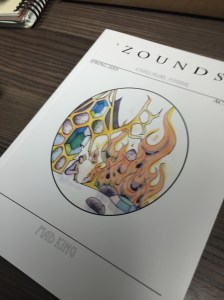
Hey! Have you bought your copy of ‘Zounds! Mad King? Click here and do so right now. You’ll never regret it.
Two dudes self-fund a documentary to discover one thing:
Why are people scared of Shakespeare?
“Because it’s hard to read,” says one girl in that sing songy teenage voice we all love so much. Yes. Shakespeare’s hard.
Muse of Fire stars actors Dan Poole and Giles Terera, who really, really want you to know that they’re a) actors and b) like Shakespeare. I think. At least they’re interested in Shakespeare.
The two grew up in the 80s “watching Star Wars, Indiana Jones and Batman and Robin.” Wait a second. Batman and Robin? The only Batman I can think of from the 80s was Michael Keaton’s in 1989, and there was sure as shit no Robin in that one. Oh well. I get what they’re saying.
Muse of Fire is pretty good. Kind of like a poor man’s Looking for Richard. It’s funny and explores why Shakespeare is so unapproachable and taught so horribly so often. It also gives a nice glimpse of why the bard is so great. I.E. when Gandalf reads Romeo and Juliet. Now that’s a pleasure to any of the senses.
It’s a perfect for secondary school students. Find a copy, show it and sit back and enjoy teachers of English. The show will do your work for you.
*If you click this link, you can watch the full interviews with those found in the film.
The two actors start with “the good, the bard and the ugly,” and trot around asking actors of varying levels of prestige why the language is so difficult. Almost all of them from Ewan McGregor to the guy who plays Gareth in the Office to Gandalf, errr, I mean Magneto, sorry, I mean Sir Ian McKellan say that Shakespearean language is hard, but you just have to do it; more or less.
Almost all the interviewees recall horror stories of being taught Shakespeare in school and hating it, but, later in life when they’re all grown up, can appreciate it. I think most people can appreciate that sentiment.
Then there are these kids at Shakespeare camp (where the Hamlet was Shakespeare camp when I was a kid?!) who are acting it out, and seem to be having real fun. See. Even kids like it.
The best part of Muse of Fire are the interviewees and there are a lot of them. Dame Judi Dench is a particularly incredible interview, as are the ones mentioned above.
The two dudes then set off for Denmark to catch Jude Law in Hamlet.
Hamlet, in Denmark with Jude Law?! Very jealous.
Law’s interview is predictably great, and he says one line that touched this brawler’s heart very fondly.
“In the end, you just have to say it,” says Law.
Yes you do. Welcome to the Bard Brawl Mr. Law. We’ll see you next week.
“It’s so rich. You have no chance to think that you can get everything every night in the language, but what you can get is a sense of journey emotionally through that scale of writing,” he goes on.
Law talks about Hamlet shifting depending on the actor, time, audience and any other number of variables. Amazing. This is why those, ‘this is how Shakespeare wanted it’ types are a tad bothersome and always produce the show in “period” English. Oh, and those types are always a treat to have in class with you.
“Your responsibility is to that audience and to that production, not 400 years of incredible actors who have played him before,” Law says.
Well said.
Much like Pacino’s documentary, the filmmakers take a jaunt into the wonderful world of the iambic pentameter that, if you didn’t know what it was already, probably skipped a few classes in high school or were at the back of the class working on your fantasy football team. It’s just one of those things you should all know.
Oh, and just like in Pacino’s film, they put a team of actors together to go through some of the language.
And, just like Pacino, the people on the film give the Duh-dum, duh-dum, duh-dum, duh-dum, duh-dum explanation of the term.
Hmmm, seems like they might want to have mentioned the Pacino film maybe once. I’ll help you out boys: Looking for Richard.
Throughout the documentary, the two actors love shooting themselves doing their “everyday things,” which is less interesting that the subject at hand.
No one cares how struggling actors spend their days boys. Move it along.
Then there’s the Wizard of Baz part…
Now, Baz Luhrmann’s Romeo + Juliet is a lot of fun, and a great gateway production to get kids into the bard, but the weird scene of Poole and Terara fawning over the DVD copy in the bookstore is kind of odd. They interview Luhrmann which is fine, but we already saw interviews with Gandalf, Jude Law, Judi Dench, Obi-Wan Kenobi and a bunch of other amazing people, so the director of Strictly Ballroom is less than it could be. Does he really have more to add than Alan Cumming (an interview the filmmakers barely used by the way)?
I shouldn’t be harsh though. Muse of Fire is fun, and nice at moments, and, like stated, is perfect for a classroom.
It’s always fun to see the greats talk about what the bard means to them, and even better when they read the words.
That, and the Bard Brawl would gladly welcome the budding actors into our ranks should they choose to join and give their thoughts.
Stay in Touch Brawlers!
Hey! Have you bought your copy of ‘Zounds! Mad King? Click here and do so right now. You’ll never regret it.
Before we get started though, big congratulations to Bard Brawler Niki Lambros who got to walk across the stage in hooded medieval monk wear to pick up her shiny new Masters diploma!
Here she is looking great and about to make her hasty getaway to meat and booze!
Bard Brawler co-captain Eric Jean (why, that’s me!) was also invited to show but went to work instead and skipped right to the drinking afterwards.
See? Niki and I are both on the same list!
(Feel free to keep calling me the Master of the English Renaissance, Daniel but remember to capitalise that ‘M’ now.)
Alright. So act IV.
You’d think Shakespeare is running out of people to kill, rape and/or mutilate but don’t worry! The fun’s not about to stop now. (Although – and I’m just throwing this out there, Bill – maybe it should. Just a thought.)
Remember Lavinia? Right. She’s got no hands and her tongue was cut out so she couldn’t rat out her rapists, Chiron and Demetrius. Lavinia pointing to a copy of Ovid’s rape-filled Metamorphoses though finally gave someone the bright idea that she might be able to write that out in the dirt by holding a stick in her mouth and guiding it with her arms.
Now that they know who to kill, it’s time for some revenge!
In scene 2 Titus sends Young Lucius over to Demetrius and Chiron to deliver some weapons with a note in Latin. They don’t really get the message but Aaron does and realises that Titus is on to them. Before they can do anything though they hear trumpets sounding which means that Tamora just gave birth to what was supposed to be Saturninus’ son.
Good for him. Except that the nurse rushes in and the kid’s black, which is a bit of a problem for Aaron.
No worries though because Tamora figures they can just kill the baby and then all’s good. Aaron agrees but as soon as he has the kid he decides he’s not going through with it. Instead, he’s going to replace the baby with some other Goth couple’s white baby while they raise his black baby.
Then he kills the nurse so she can’t say anything about it.
Smart. He clearly has everything under control.
Meanwhile, Titus and his allies meet with Marcus and Lucius who fled from Rome and are back now with a sweet Goth army who are mad as hell! They decide that they’ll literally send Saturninus a message by shooting a bunch of arrows with messages from the gods right into the court.
And then, as all great conspirators have done since time immemorial, they recruit a passing clown with a few pigeons to deliver the final message of ‘We’re coming for your ass!’ right to the Emperor for them.
So they of course kill the messenger. Greedy clowns just can’t catch a break, I guess.
It’s just at this moment that a messenger shows up to tell them that a giant Goth army is about to kill Rome and that it’s being led by Titus’ son Lucius who’s crazy popular in Rome. Saturninus starts panicking but Tamora has a cunning plan: she’ll talk Titus down and then he’ll talk Lucius down.
Guess no one bothered to tell her that Titus knows that she helped her sons rape his daughter.
I’m sure he’ll be reasonable.
Stay tuned for the dramatic conclusion! My gut (and the fact that I’ve read this before) tells me that this act V might be particularly delectable.
Also, welcome back to the pod legendary sonneteer and LA Kings fan Zoey Baldwin with sonnet 56!
Act I, scene iii; Mad King.
Check out the amazing writers and artists in ‘Zounds!










 The Bard Brawl