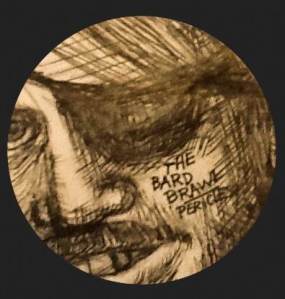
BB: Timon of Athens, Act III

artwork - Stephanie E.M. Coleman
artwork – Stephanie E.M. Coleman

(Podcast recorded and produced by Daniel J. Rowe, blog written and edited by Eric Jean)

Welcome back to the Bard Brawl! This week, Daniel J Rowe, ‘Mister’ Nicholas MacMahon and myself are back for act III of Shakespeare’s tragedy, Timon of Athens.

Listen to or download the podcast.

With creditors knocking at his door, Timon turns to his friends to lend him a little money so he can avoid bankruptcy. He sends his servants out to see the three lords who he feels pretty confident will be able to bail him out.

Flaminius arrives at lord Lucullus’ house in act III, scene 1. Lucullus greets Timon’s servant warmly as he expects that he is here to deliver some sort of gift. When he discovers that Flaminius is there to ask for money, Lucullus puts on his best ‘I told him not to be so generous’ act and then tries to bribe Flaminius so he’ll pretend he wasn’t able to find Lucullus. Flaminius tosses the cash back at Lucullus then curses him (and all other selfish jerks like him) to be boiled in a vat of molten coins.

The next lord to be visited is Lucilius. By the start of this scene, he has apparently heard that Lucullus refused to bail Timon out. He finds it deplorable and says that of Timon had turned to him instead, he would have been happy to help him. And on that cue, Servilius enters. Lucilius also seems to think that Timon’s servant is here offering gifts at first. When he finds out that Servilius is here to beg some cash for Timon, Lucilius replies that he would love to be able to help Timon out but – wouldn’t you know? – he just spent the last of his available funds this very morning, just before Servilius arrived. What an unfortunate coincidence.

Are all of Timon’s friends flattering jerks? Surely Sempronius isn’t like Lucius, Ventidius, or Lucullus? At the start of scene 3, Sempronius seems disgusted by the fact that the others lords have refused to help Timon. Even worse, Sempronius is disgusted that he wasn’t asked first, as this might suggest that maybe Timon doesn’t like him as well as the other lords. So, if Timon doesn’t care for him as much and his close friends refused to bail him out, why should Sempronius have to help him out? He proclaims to Timon’s servant that any man who would dishonour him in this way won’t get any help from him.

With no one left to ask for money, Timon has locked himself up in his house in scene 4. In a hall in his house, his creditor’s servants want to be paid. Seems that the servants aren’t too keen to be collecting from Timon when they know full well that their masters walk around with the jewellery that Timon once gave them. As they wait, Timon’s messengers return to announce that they have failed to get any money for Timon’s debts.

Timon eventually enters the hall in a rage and is greeted by the collectors’ bills. He offers to pay with his blood and flesh and chases the servants out of his house. Once they are gone, he asks his servants to invite all of his former friends back to his estate for one final banquet.

We leave Timon behind for a moment as scene 5 takes place in the Athenian senate-house and features the general Alcibiades. It appears that one of Alcibiades’ soldiers was involved in the violent crime in Athens. The law calls from his execution but Alcibiades, as his commanding officer, is here to beg the senate for leniency. The senate refuses. When Alcibiades is a little too insistent in his critique of the thanklessness of the Athenian senate, they banish him from the city despite all of the wars he fought for them. This should remind you of another general who was forced to turn his back on his city.

The last scene of the act takes place in Timon’s house. The lords have all arrived for the feats and are commenting that clearly Timon’s need for money must not have been so great as they have heard. Timon greet them all and escorts them into the dining room where for each guest is layed out a covered dish. The lords sit down, Timon curses all of Athens’ flattering lords, and once the covers are removed, each guest sees that their meal is warm water and rocks. Timon slashes the water in their ungrateful faces and then drives them out in a hail of stones.

The craziest part of the whole thing is that none of the lords seems to have a clue as to why Timon would be pissed at them…

Penniless and friendless, What’s next for Timon? Find out next week!

Sonnet 56 read from afar by Zoey Baldwin.

Shout out to the Segal Centre’s production of Othello in its last weekend and the Shakespeare Theatre of New Jersey’s upcoming Pericles from Dec. 4 – 29.


Join us by contributing to the Bard Brawl journal volume I at our Indiegogo page.

Stay in Touch Brawlers!

Follow @TheBardBrawl on Twitter.

Like our Facebook page.

Email the Bard Brawl at bardbrawl@gmail.com

Subscribe to the podcast on iTunes

Or leave us a comment right here!

← Back

Thank you for your response. ✨

A conversation with the director, Othello

Othello, directed by Alison Darcy. (courtesy the Segal Centre)

Daniel J. Rowe

It is one of Shakespeare’s most engaging and intriguing works: Othello, now playing at the Segal Centre in Montreal. It is a favourite of the Bard Brawl and watched with scrutiny by viewers. Check out brawler Eric Jean‘s review. Director Alison Darcy spoke with the Bard Brawl.

Bard Brawl: Othello is huge in scope and theme, and it’s been done a lot. Does that add pressure or do you enjoy that?

Alison Darcy: Both. I think it adds pressure and I kind of enjoy it. Of course everyone has their own ideas about the play and about Shakespeare and how it should be done, and I like the fact that there is no should and this is the way our team felt that it’s truth was being revealed in the most interesting way in the moment. This was what we wanted to offer from it. It’s interesting to challenge people with that because so many people have really strong preconceptions about how Shakespeare should be done. It’s interesting not to necessarily always follow that, but to go with what you think is the truth of the play.

B.B.: In the same sense don’t you find that often people allow a lot more exploration these days then they used to?

A.D.: For sure. Now, it’s almost expected to have your own interpretation, but it’s still, when it comes down to actual technique of the language or certain characters, people still have their reservations and their favourites and their favourite lines and their ideas of what things mean. Before it used to be more stylistically, they would say that it would have to be done in a certain period or a certain focus on the language in a very specific way, accents or whatnot. Now it’s more about interpretation, but still people have their preconceptions and they come out quite ferociously at times. People are quite willing to go to battle to defend their ideas of how Shakespeare should be done. Particularly this play.

B.B.: You use water as a metaphor throughout, and the final dramatic scene was very much centred on it. Can you tell me a bit about why you decided to use water in that way?

A.D.: For me it came from the text. It’s really prevalent in the text – water as a theme. It’s constantly referred to as being symbolically linked with deceit, and with passion. It says, ‘she’s false as water.’ A lot of the major themes are linked to water in the play, and so I was originally already playing with that. I also find that elementally, it’s very connected to the way the play moves. It’s a very quick-paced, mercurial kind of text, and it shifts and changes very quickly as does Iago’s mind and the way he moves and it feels like water to me.

The ending and the way I used the water in the ending? I like to leave it open to debate. People have been very vocal about it. Some people really didn’t like it, and some people absolutely love it. What’s more interesting to me is what people think it means. Some people are just absolutely baffled by it and others have very clear ideas about what metaphorically it meant. I have my own ideas about it of course, but I have no interest in didactically forcing that opinion on anybody else. It’s an allegory or it’s a metaphor and it’s there to be interpreted… It’s what I felt encapsulated that moment for me in the play. The fallout from the climax and the gushing of everything emotionally and psychologically that comes forth in that fifth act.

B.B.: You can’t do Othello without addressing race, but you don’t seem to push that theme far, and in not pushing the race card as far as you could have a lot of other themes emerge like the Emilia feminist line. She was really good.

A.D.: She’s amazing, and maybe it’s because I’m a female director, but I’ve always found the female characters in this play particularly moving. People often kind of hate Desdemona – not this version though, people have I think been liking this Desdemona. I always found it unfair for people to judge the character the way they did and I don’t find historically that Emilia gets her due, as such a strong character. I guess my leaning were in that direction to explore.

I wouldn’t say that I didn’t explore the racism. I think what I did do was change the conversation a bit, so that it wasn’t necessarily racism, but it was more about ‘outsiderism’, which is definitely something that is very strong in the play and they do treat him as an outsider, and I think that the exoticism of him and the separation of him constantly creates a personna that he allows himself to engage in: the story teller, the magnificent warrior that I don’t think he really is. I think he enjoys the language and the story telling, but when it comes down to it I think the insecurity that he has being part of this kind of society that doesn’t ever really accept him is then really used by Iago to draw him out of his safe zone.

I’ve always thought of the handkerchief as being a real symbol of who he is. It’s this ellaborate, exotic, foreign item that is valued for its exoticism and its beauty, and for how different it is. Everyone wants to get it copied. Everyone wants to have a piece of it.

Apparently at the time it was actually very gauche that – if you were within the same social class as someone – to ever show your wealth as being exceeding of theirs, so the only kind of way to make yourself better than your neighbour was to find exotic items and things from far away. It was to have these little secret closet collections.

I’ve often thought of Othello as, in a way, a rarity that’s been collected from a foreign land and brought to Venice and cherished because he’s different and odd. Therefore, his actual self, his sense of real self is muted by this idea of who he is; this exoticism. He even says the way he won over Desdemona was by telling these fantastical stories most of which we know are not true. I think he identifies with that idea of being a curiosity, and he thinks that that is his value.

So then when this handkerchief, which symbolizes the same kind of thing, is so easily dismissed or given away by her, it’s like she’s giving away his identity.

 Sean Arbuckle (Iago) - Photo by Andrée Lanthier; (courtesy the Segal Centre)

The handkerchief is a symbol of who Othello really is, according to the play’s director.  Sean Arbuckle (Iago) – Photo by Andrée Lanthier; (courtesy the Segal Centre)

I feel like the play is really about sense of self and about the way that your identity can be stripped from you due to racism or whatever it may be. I think that’s what destabilizes him, not just the jealousy. Just becoming that jealous, it never really made sense to me, and it’s always a problem people have with the play. Why does he go so crazy so quickly? I feel it’s because Iago knows exactly the precision point how to attack him, and it’s with this sense of self. It’s also because Iago also his sense of self was undermined and taken away when his status as a warrior was taken from him by Othello.

Darcy-Alison2Alison Darcy is the co-founder and co-artistic director of Scapegoat Carnivale Theatre. In addition to directing, producing and teaching theatre, she has been acting professionally since childhood.  

Tickets can be purchased from the Segal Center box office, either by phone at 514-739-7944 or directly on the Segal Centre website site. Prices startfrom $24. The play runs until December 1st.

This Othello is Not Airtight but it Does Hold Water

Eric Jean

The Segal Center‘s production of Scapegoat Carnivale Theatre‘s Othello is a version of Shakespeare’s play in which the humours of the rain and sea seem to mirror the tempest at the heart of Othello.

Taking their cue from Othello’s accusation that Desdemona is “false as water,” Alison Darcy (director) and Joseph Shragge (dramaturgy) created a version of Othello which highlights the watery imagery which permeates Shakespeare text.

Andrew Moodie (Othello) - Photo by AndrÇe Lanthier
Andrew Moodie is Othello at the Segal Centre. Currently playing. Photo by Andrée Lanthier

As they describe, “water is present in the geography and language” throughout the play in the canals of Venice, the sea at Cyprus, the hypnotic currents of Othello’s storytelling and of course in Desdemona’s tears. This is foregrounded in this production in the ongoing sounds of waves and rainstorms and in the flickering blue light which submerges us in the same dramatic depths as the action taking place on stage.

The bare and unadorned dramatic space is used to great effect. The traditional Renaissance rapier-and-dagger sword fights were greatly appreciated by this Shakespeare and D&D nerd.

The staging of the final act of the play is particularly striking as a drape drops and hangs from the ceiling, serving triple duty as bed covering, curtain and murder weapon. A chilling portrayal of one of Western drama’s most famous homicides.

Despite this strong staging, the play does suffer from uneven acting at times.

As Othello, Andrew Moodie often lacked intensity and presence. In the first scene, when Othello is discovered by Brabantio and his men, Othello admonishes both his men and Brabantio’s to “Keep up [their] bright swords.” However, the delivery of the passage seemed flat, without conviction. While he did deliver some admirable performances at time – the seizure scene in act III springs to mind as particularly noteworthy – Moodie seemed to be searching for his character at various times throughout the play.

Moodie with
Moodie with Sean Arbuckle as Iago. Photo by Andrée Lanthier (courtesy the Segal Centre)

In contrast, Amanda Lisman quickly found her character and, particularly after the first act, delivered a strong performance as Desdemona. However, Julie Tamiko Manning, in the role of Emilia, was one of the stand-out roles of the evening.

Sean Arbuckle’s Iago was also excellent, switching seamlessly between counselling Roderigo to keep sending him money, implanting his poisonous suggestions into Othello’s psyche and playing at being just one of the boys with Cassio.

Maurice Podbrey offered a commanding performance as Brabantio in act I but Paul Hopkins’ Montano was, in my view, the weakest member of the company and made one thankful that he had only a minor part.

Amanda Lisman (Desdemona) Julie Tamiko Manning (Emilia) _ Photo by AndrÇe Lanthier.jpg
Amanda Lisman (Desdemona) Julie Tamiko Manning (Emilia). Photo by Andrée Lanthier

While the synergy between Iago and Othello seemed forced at times, the exchanges between Iago and Cassio, as well as those between Emilia and Desdemona, were not only inspired but made the Shakespearean verse seem as natural to the ear as everyday speech. Fortunately, Moodie and Lisman seemed well-matched as husband and wife and if this Othello failed to convince that he could command armies, he could at least persuade that he could charm Desdemona’s heart.

One of the most successful scenes of the production took place in act IV, scene 3 between Emilia and Desdemona. Emilia and Desdemona’s conversation about the infidelities of men, delivered so matter-of-factly by Julie Tamiko Manning and Amanda Lisman only a few moments before Othello arrives in the bedroom, perfectly captures and prepares the tragedy which is about the follow.

Despite its’ imperfections, this production of Othello remains a very successful staging of Shakespeare’s text and one definitely worth seeing.

Or why not offer the gift of jealousy and murder for the holidays this year?

Tickets can be purchased from the Segal Center box office, either by phone at 514-739-7944 or directly on the Segal Centre website site. Prices start from $24. The play runs until December 1st.

BB: Timon of Athens, Act 2

Act II, ii; Flavius
Act II, ii; Flavius

(Podcast recorded and produced by Daniel J. Rowe, blog written and edited by Eric Jean)

Welcome back to the Bard Brawl and act II of Timon of Athens.

Listen to or download the podcast.

What did you think of act I? Kind of makes you want to have a good look at your own friends, doesn’t it?

Nonsense! You are rich in your friends, aren’t you? 😉

While the party’s in full swing within, a Senator arrives at Timon’s gate at the start of act II, scene 1. He’s disgusted that Timon should spend so much money on parties with his friends while he has outstanding debts to this senator. The Senator commands his servant Caphis to take debt bonds to Timon and not return until Timon pays up. The senator suspects that, when the money runs out, so will Timon’s friendships.

Flavius is just complaining about Timon’s careless spending when Caphis walking in to scene 2, speaking with Varro and Isidore’s servants. These men are also looking to collect on some outstanding debts. They intercept Timon as he returns from hunting. Timon tried to talk his way out of it but Caphis reminds him that his money was due six weeks ago and won’t take no for an answer. Flavius promises to deal with it for them right after supper and ushers Timon away.

The servants hang back to be made fun of by the Fool and Apemantus who, as Daniel points out, seem to be competing for the job of “guy who gets to say whatever he wants to Timon’s ‘friends’.”

After hearing about the current state of his finances, Timon tries to blame Favius for not mentioning any of this sooner. Flavius of course tell him that he tried to but that Timon wouldn’t hear it before. And now, even if Timon were to sell everything he has, that would only be enough to pay back about half the debt. While Falvius freaks out Timon calms him down and reminds him that as he has so many friends in good financial situations surely a few of them will be willing to help bail him out of this. But, turns out that Flavius has already approached some of these friends who gave him a bunch of excuses as to why they couldn’t help Timon. No big deal though: Timon’s buddy Ventidius – who he bailed out of jail in act 1 – just struck a rich inheritance so he’s sure that he’ll be more than happy to help out Timon.

Here are some of the characters introduced in this act:

  • Senator: This senator has lent money to Timon who does not appear to be in any hurry to pay him back. He comes armed with his legal documents to collect his debt.
  • Caphis: A servant to the Senator who comes knocking at Timon’s door to get the money he is owned.
  • TBD: _description_

Excited for act III?

A special shout out to Emily Murphy who wrote this article for CBC’s Canada Writes site.

Different Timon.
Different Timon.

Join us by contributing to the Bard Brawl journal volume I at our Indiegogo page.

Stay in Touch Brawlers!

Follow @TheBardBrawl on Twitter.

Like our Facebook page.

Email the Bard Brawl at bardbrawl@gmail.com

Subscribe to the podcast on iTunes

Or leave us a comment right here!

← Back

Thank you for your response. ✨

CBC Canada Writes article on the Brawl

November 14, 2013 article by Emily Murphy


Check out Emily Murphy’s article for CBC Canada Writes on the Bard Brawl.


Screen Shot 2013-11-15 at 10.43.08 AM


Join us by contributing to the Bard Brawl journal volume I at our Indiegogo page.

Stay in Touch Brawlers!

Follow @TheBardBrawl on Twitter.

Like our Facebook page.

Email the Bard Brawl at bardbrawl@gmail.com

Subscribe to the podcast on iTunes

Or leave us a comment right here!

← Back

Thank you for your response. ✨


BB: Timon of Athens, Act 1

TIMON

(Podcast recorded and produced by Daniel J. Rowe, blog written and edited by Eric Jean)

Welcome back Brawlers!

Today we start on our eighth play, Timon of Athens! You’re going to love this one.

Listen to or download the podcast.

Timon of Athens is a tragedy set in – you guessed it – Athens. Timon is a well-loved aristocrat who is extremely generous with his wealth. In other words, he’s a sucker surrounded by sycophants but he’s the only one who doesn’t see it.

First order of business, this is how you pronounce Timon’s name: /ˈtaɪmən/.

Seeing as that’s basically gibberish, here’s a clearer pronunciation guide: it’s Timon like Simon, not Timon like Timon and Pumba.

Moving on.

Only two scenes in this opening act but they cover a lot of ground. The play opens on a scene set inside one of the (probably richly appointed) halls of Timon’s house in Athens. A painter, poet, jeweller and merchant are discussing the fact that they each are hoping to win Timon as a patron, or to sell their products to him at an inflated price. We learn that this appears to be common practice and that Timon seems to operate under the motto of ‘no unreasonable offer refused.’

Eventually Timon arrives, followed by a messenger who tells him that his friend Ventidius is about to be carted off to debtor’s prison because he’s been unable to pay his debts. (Yes, unpaid invoices used to result in jail time, indentured service or flat-out slavery.) Of course, Timon cannot let his friend go to jail so he accepts to pay the debt on his behalf and asks the servant to bring him to dinner so he can eat the shirt of Timon’s back as well.

Hot on the heels of the this messenger comes an old Athenian gentleman who is upset because one of Timon’s poor servants wants to marry his daughter. No problem for Timon; he offers to match the dowry offered to allow Lucilius to marry her. No sooner has the old man walked off that the painter, poet, jeweller and merchant swoop in. However Apemantus, an ornery Athenian lord, calls them out for their self-interested flattery. Timon accuses Apemantus of being an arrogant and proud ass; Apemantus calls Timon out for being a sucker who spends his money buying false friends. (Apemantus is still going to eat Timon’s food though, and Timon isn’t going to kick Apemantus out for berating his guests.)

Scene II features the actual banquet itself. A bunch of lords and senators of Athens are in attendance, partying it up on Timon’s dime. Ventidius is there and thanks Timon for his hep in bailing him out of jail. In this short span, he has had a sudden and mysterious windfall: his father died and Ventidius inherited his fortune. He offers to pay Timon back twice the amount of his bail but Timon refuses to take his cash. In fact, he says, his bank account is always open for his friends.

More banter between Apemantus and Timon ensues and Timon threatens to banish Apemantus to the kiddy table. Timon then starts making speeches about how great his friends are and how he’s lucky to be able to take care of all of them. Some women dressed as Cupid and some Amazons then arrive to crash to party. After a dance, Timon feeds them too.

In the mood to hand out more gifts, Timon calls his servant Flavius to bring him a box of jewels. It would seem that Timon is in the habit of giving more than he can afford. Flavius tries to warn him that he’s broke even as he’s handing out jewels like they’re business cards. The party wraps up with everyone running off with their loot. Only Apemantus remains and he tries to get Timon to see that’s he’ being taken advantage of. Timon, of course, refuses to see it.

With that , here’s a short list of the major characters appearing in this act.

  • Poet, Painter, Jeweller and Merchant: Their titles pretty much sum it all up. These aren’t really fully fledged characters but are there to give Timon opportunities to give out more money than he can afford.
  • Timon: A naive and generous Athenian lord who’s not quite as wealthy as he thinks he is, in both his friends and his funds.
  • Apemantus: Honestly, Apemantus is a bit of a jerk. Is he right? Yes. Timon is being taken for a ride by all of his so-called friends. However, if your ‘friend’ was trying to point out your mistakes by being a sarcastic jerk, how likely would you be not to tell him to f-off? There’s a difference between flattery and tact, Ape-Mantis! (Sorry, I can’t help thinking ‘Godzilla vs Ape-Mantis’)
  • Alcibiades: He’s an Athenian general recently returned from battle. He’s actually one of Timon’s real friends.
  • Ventidius: This is the guy Timon bails out of jail. And who we now know is rich because his dad died and he inherited the fortune. Remember that because it might come back later.
  • Flavius: Timon’s servant and, it would appear, his chief bookkeeper. He’s the only guy who seems to know just how little money Timon actually has.

Surrounded by great friends, full of food and wine, where else could this play go but down, down, down! Should be entertaining.

Terry stopped by to give his interpretative reading of sonnet 38. Trust me, you want to stay for this one.

Stay tuned, Brawlers. 

Join us by contributing to the Bard Brawl journal volume I at our Indiegogo page.

Stay in Touch Brawlers!

Follow @TheBardBrawl on Twitter.

Like our Facebook page.

Email the Bard Brawl at bardbrawl@gmail.com

Subscribe to the podcast on iTunes

Or leave us a comment right here!

← Back

Thank you for your response. ✨

BB: Pericles, The Speeches

Artwork - Daniel J. Rowe.
Artwork – Daniel J. Rowe.

Welcome Brawlers to our speeches podcast for Pericles, Prince of Tyre!

(Podcast recorded and produced by Daniel J. Rowe, blog written and edited byEric Jean)

Listen to or download the podcast.

Not one of Shakespeare blockbusters, this play will keep you guessing with its string of improbable twists and turns. The verdict? More people should read it.

You can help popularize Pericles by dropping some of this bardic wisdom (which you’ll have fully memorized by then) the next time you’re at a party. Bonus points for you if you can flash mob one of these.

(We accept video submissions.)

“Of all say’d yet, mayst thou prove prosperous!” Act I, scene 1
Speakers: Antiochus’ daughter, Pericles, Antiochus
So. Pericles gets on a boat and travels to Antioch to try to score this world-renowned princess to be his wife. He’s already managed to impress the girl who is won over by his big bucks and his sexy looks. Like all good potential father-in-laws, Antioch decides he better test this guy to make sure he’s the real deal… by asking him to decipher a riddle.

Okay, no problem. Pericles is up for it. And then he discovers that this pervert is advertising his incestuous relationship with his daughter. Thing is, Antiochus is so used to being surrounded by ‘yes men’ that he’s not prepared for the fact that Pericles is ready to call him out on how disgusting this is. As for the girl? Looks can be deceiving.

“By Juno, that is queen of marriage” Act II, scene 3
Speakers: Thaisa, Simonides, Pericles
Freshly fished out of the sea with his rusted armour, Pericles is hard at work out-jousting the competition at Simonides’ “Marry my Daughter” Royal Rumble when he catches Thaisa’s eye. While she is busy imagining herself getting with that dreamy Pericles, he’s more interested in Thaisa’s dad. “Wow, that guy would totally be an awesome replacement for my dead dad.”

It’s a strange play.

“Thou god of this great vast, rebuke these surges” Act III, scene 1
Speakers: Pericles, Lychorida
Pericles is on his way home to Tyre with his wife when Thaisa goes into labour. Unfortunately, as she’s trying to give birth, a huge storm is raging around them. He is asking the gods to call off the storm. And when the midwife and nurse Lychorida arrives, he hopes that she can help speed things up. Instead, she hands him his daughter, Marina, introduced to her father for the first time as a piece of his dead wife.

“I hold it ever” Act III, scene 2
Speakers: Cerimon, Second Gentleman
Our play’s miracle worker affords himself a moment of moralistic speechifying before going to work bringing Thaisa back from the edge of death. Virtue and cunning > nobles and riches. What type of ‘virtue and cunning’? Alchemy. So you can learn the power over life and death, and use it only for good, right? Well, yes. That’s exactly what Cerimon does. He even takes Thaisa’ crown jewels… for safe keeping, of course.

“My commission” Act IV, scene 1
Speakers: Leonine, Marina
So pirates. Maybe we were a little excited about reading a Shakespearean play with pirates in it so we inflated their importance in our recollection of play. Still, the pirates here actually end up saving Marina’s life, in a very twisted sex-trade driven way. Dionyza ordered Leonine to kill her Marina and he decides that after they have scooped her up and ran off with her to their ship, he should follow along to make sure that they kill her after they have raped her. (I thought my job sucked.) Except, they didn’t rape her. They ‘only’ sold her into slavery where she transformed the lustful governor of Mytilene into a noble, Pericles-approved husband.

Artwork - Stephanie E.M. Coleman. Inspired by the three Pirates of Pericles, Prince of Tyre.
Artwork – Stephanie E.M. Coleman.

“Of Antiochus and his daughter you have heard”, Epilogue (Act V, scene 3)
Speaker: Gower
Are you ready for the moral of the story? I mentioned in the show that I couldn’t think of too many of Shakespeare’s plays which ended with epilogues. Actually, that’s not really accurate. I can name several which do end with some form of epilogue: As You Like It, The Tempest, Twelfth Night, A Midsummer Night’s Dream.

However, Shakespeare’s not generally so heavy-handed. In case we missed it (because being struck down by lightning or burned alive in your palace by a mob are very subtle forms of divine retribution), ‘Gower’ spells out who the heroes and villains are. Pericles, Helicanus and Cerimon: good; Antiochus, Cleon and Dionyza: bad.

Don’t sleep with your daughter and don’t kill your neighbour’s kid.

Geez, good thing you spelled it out for us, Shakey!

Bonus sonnet 67 read by Niki Lambros.

Stay in touch, Brawlers!

Follow @TheBardBrawl on Twitter.

Like our Facebook page.

Email the Bard Brawl at bardbrawl@gmail.com

Subscribe to the podcast on iTunes

Or leave us a comment right here!

← Back

Thank you for your response. ✨

BB: Pericles, Act V

Artwork - Stephanie E.M. Coleman
Artwork – Stephanie E.M. Coleman

(Podcast recorded and produced by Daniel J. Rowe, blog written and edited byEric Jean)

Welcome back to the Bard Brawl! As promised, we’re happy to bring you our final brawl of Pericles, Prince of Tyre.

Listen to or download the podcast.

Like the acts which came before, act V begins with Gower’s prologue (starts with “Marina thus the brothel ‘scapes, and chances”). Gower narrates that Boult, who hasn’t been able to convince Marina to give up the goods, agrees to help find her a respectable household to welcomed into. While we don’t know yet which household, it seems that things are working out for her just fine. As for Pericles? Well, wouldn’t you know that his ship just happens to be sitting at anchor in Mytilene at this very moment!

Seeing such an important ship anchored off his coast, the governor of Mytilene – Lysimachus – takes a small vessel to greet the Tyrian ship and find out why it’s here and what it wants. He and Helicanus exchange a few words at the start of act V, scene 1. Lysimachus asks to meet Pericles, which Helicanus arranges but Perciles is a miserable mess. Helicanus is about to recount the events which have led to Pericles’ current condition but is interrupted when Marina arrives.

Seems that Lysimachus went all Pretty Woman on Marina and ended up marrying her. (Well, he wasn’t getting anywhere with her the other way…) They ask Marina to try to snap Pericles out of it. Marina is about to give up but feels compelled to keep at it until she’s broken Pericles out of his torpor. She decides to tell him her story and when she reveals her name and what happened to her, father and daughter are reunited. But, Pericles is overcome and lulled to sleep my some celestial music.

Then, an apparition of the goddess Diana arrives and tell him to go to her temple and relate the story of how he lost his wife. Yes, Shakespeare wraps things up by having a goddess show up on stage and point our hero to the place where his wife has been living as a nun all this time.

Act V, scene 2 is a short passage narrated by Gower again, as he stands before Diana’s temple. (Starts with: “Now our sands are almost run.”) Pericles agrees to let Lysimachus marry Marina but only after he has made his sacrifice to Diana.

Off to the temple they go for scene 3. Cerimon is there presiding as husband, wife and daughter are reunited at last. It occurs to Pericles that they should let Thaisa’s father know that she’s alive but turns out he’s been dead for a while now. Which of course means that Pericles gets to move to Pentapolis as the new king, and Lysimachus and Marina get to take over the throne of Tyre.

Gower gets the final word of the play where he gets to moralize about the people in the play: Helicanus is the model of loyalty, Cerimon is a model of charity; Antiochus, Cleon and Dionyza are evil sinners who have been justly punished by Heaven for their heinous crimes.

And that’s the end of the Bard Brawl’s seventh play!

Love it or hate it, it seems that this play leaves no one indifferent.

What did you think of Pericles,?

Wako, Bard Brawling cat

Sonnet 44 read by lord Jay Reid of Ethickshire.

Stay in Touch Brawlers!

Follow @TheBardBrawl on Twitter.

Like our Facebook page.

Email the Bard Brawl at bardbrawl@gmail.com

Subscribe to the podcast on iTunes

Or leave us a comment right here!

← Back

Thank you for your response. ✨

BB: Pericles, Act IV

Artwork - Stephanie E.M. Coleman
Artwork – Stephanie E.M. Coleman

(Podcast recorded and produced by Daniel J. Rowe, blog written and edited byEric Jean)

Did you miss us? I bet you did!

The Bard Brawl is back and ready to come out swinging with this week’s recording of act IV of Pericles, Prince of Tyre!

Listen to or download the podcast. (And hey, it’s been a while so why no go back and read up on acts I, II and III?)

Once again, Gower’s prologue (starts with “Imagine Pericles arrived at Tyre”) open’s up the act. Pericles is back in Tyre. He thinks his wife is dead but she’s alive and living as a nun in Ephesus. Their daughter, Marina, is living in Tarsus with Cleon and Dionyza. There’s a but of a problem, though: Dionyza is jealous that Marina is better/more beautiful than her own daughter so she decides she’s going to have her killed.

That’s the scene which is presented to us in act IV, scene 1. Dionyza has hired Leonine to kill Marina. Dionyza tells maria to go take a walk with the man she has never met. Seems they head for the docks, based on what happens next. (So he can dump the body into the ocean maybe?) Anyhow, when Leonine grabs marina to kill her, a bunch of pirates (yay!) show and scare him off. Then, as pirates are wont to do, they claim her as booty and run off to their ship. Leonine figures he’s seen probably seen the last of her but decides that he’d best follow along. You know, to make sure that they kill her once they rape her.

As it happens, the pirates don’t rape her (if we believe Marina as well as the aptly named First Pirate). Instead we learn at the start of scene 2 that she has been sold to a brothel in Mytilene. The prostitute population of Mytilene is not what it used to be so Pandar, Bawd and Boult buy her figuring they can make a bunch of money by selling her virginity to some pervert. Of course, Marina isn’t planning to comply with this but they spread the word about town anyhow in search of a buyer.

Back to Tarsus where Dionyza breaks the news of Marina’s death to Cleon. He whines about what they’ll tell Pericles when he comes looking for his daughter but Dionyza basically says: tell him she dies. The end. While he seems about to argue with her, Dionyza seems pretty confident that the weak-willed Cleon will just do whatever she says. Yup.

Gower makes a surprise appearance in scene 4 (starts with “Thus time we waste, and longest leagues make short”) to narrate what happens next (see it only as a dumb show): Pericles goes to Tarsus where he learns his daughter is dead. He puts on some rags, vows never shave again, and heads out to sea once more. Gower closes with Marina’s epitaph – what was written by that harpy, Dionyza.

Scene 5 is a short exchange between two men, just outside the brothel in Mytilene. Apparently, someone in the brothel is showing sinners the errors of their ways. Huh. Now that is strange.

Of course, we find out in scene 6 that Marina is behind all of this, much to Pandar, Boult and Bawd’s chagrin. Seems she’s been converting the patrons to virtue. These pimps did manage to find a buyer for Marian: Lysimachus, the governor of Mytilene is very interested in Marina. They all try to convince Marina to give up the goods, but she resists. During her conversation with Lysimachus, he realises that she is noble-born and that she is the one pure thing in the city. Boult devices he’ll rape her so she’ll get over the whole virginity thing but he reminds him that Pandar and Bawd would kick his ass so he holds off for now.

Next week (no, really, we promise!) we’ll be back with the final act of this crazy rape-y, incest-filled play.

If you want to follow along the acts in a version of the play which is not so messed up, this is the app most of the brawlers use when we record. As a bonus, each play comes with a breakdown of scenes and characters. You should check it out.

Also, it’s always nice to have some Shakespeare with you at all times, in case you need an emergency soliloquy.

Stay in Touch Brawlers!

Follow @TheBardBrawl on Twitter.

Like our Facebook page.

Email the Bard Brawl at bardbrawl@gmail.com

Subscribe to the podcast on iTunes

Or leave us a comment right here!

← Back

Thank you for your response. ✨

Up ↑